
News Releases
Konica Minolta Launches O’ROBE, an Inline Pretreatment Ink for Reactive Dyes
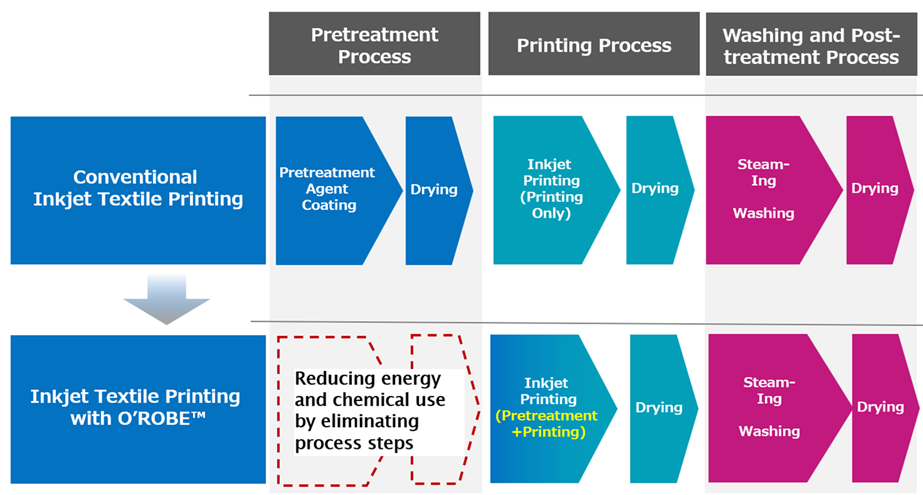
Tokyo (January 27, 2026) – Konica Minolta, Inc. (Konica Minolta) announced that the Company has added the O’ROBE inline pretreatment ink for reactive dyes to reduce energy consumption by shortening the inkjet textile printing process, to the lineup of inks for the Nassenger* series of inkjet textile printers.
Value Proposition of Konica Minolta’s O’ROBE
1. Reduced environmental impact
In the inkjet textile printing process, specialized products called reactive dye inks, which are derived from dyes, are used to dye natural fibers such as cotton and silk. To enable reactive dye inks to achieve vivid, rich color on fabric fibers without blurring and ensure good retention after laundry, pretreatment is required to coat the fabric with chemical agents, including urea. These chemical agents must be treated properly upon disposal, requiring equipment and imposing costs on the textile industry. This is considered a social issue.
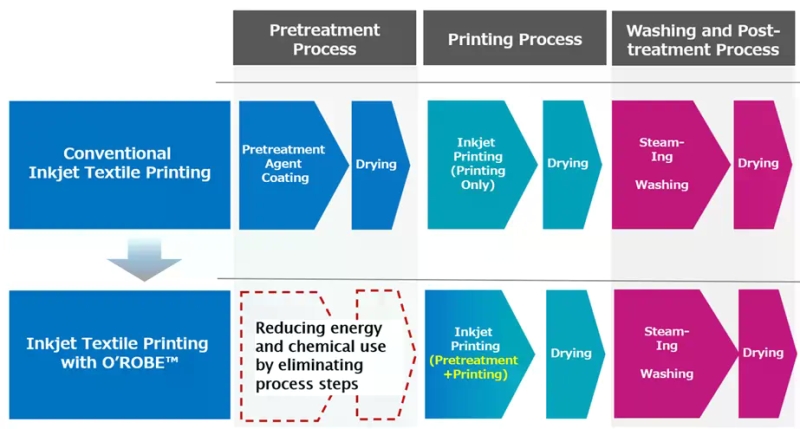
By using O'ROBE in the Nassenger series printers, it is possible to accurately apply pretreatment ink only as needed in those areas of the fabric to be dyed, concurrently with reactive dye inks.
This eliminates the drying process after coating, which is required in the conventional pretreatment process, thus significantly reducing the use of energy such as electricity and gas, as well as the consumption of chemical agents for pretreatment, reducing the environmental impact.
2. Improved profitability of dyeing and finishing companies
Fabric coated in the print pretreatment process may become discolored by temperature and humidity during storage. Dyeing and finishing companies must choose whether to apply coating with their own specialized equipment or to subcontract this work, i.e., whether to invest in equipment or to risk longer lead times when placing orders.
O’ROBE ink reduces the burden on dyeing and finishing companies and helps improve profitability by integrating the pretreatment process into the printing process.
Demonstration of the Effect through Introduction to a Towel Printing Process
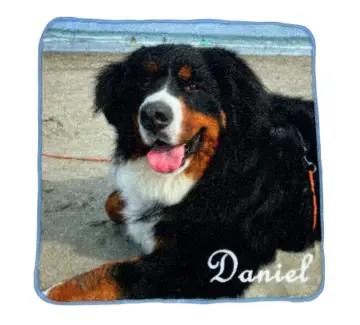
Yutaka Co., Ltd., which sells original towels and T-shirts online, used to subcontract the pretreatment of towel fabric before printing by the Nassenger. By using O’ROBE in the Nassenger, the company could perform pretreatment in the in-house inkjet textile printing process. This eliminated the need to transport and store pretreated fabric and reduced the risk of quality variations and administrative burden.
O’ROBE also facilitates the penetration of dye ink into fabric, eliminating the granular texture of skins printed on towels and achieving natural rendering.
Growth of the Printed Towel Market
Decorative towels with high-quality printing are highly practical and create a sense of uniqueness and luxury. Demand has been growing in art and sport events and concerts as well as campaign-related novelty markets. The market for originally designed decorative towels for hobbies and collections is also growing. With this background, inkjet textile printing enables small-lot production for limited-edition items based on themes, such as regions and seasons, and demand is expected to grow.
By introducing the O’ROBE ink, Konica Minolta increases the efficiency of towel production, thereby helping to energize and expand the market.
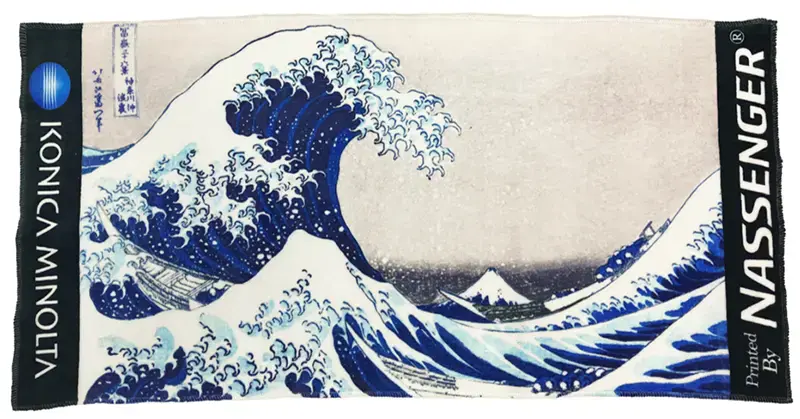
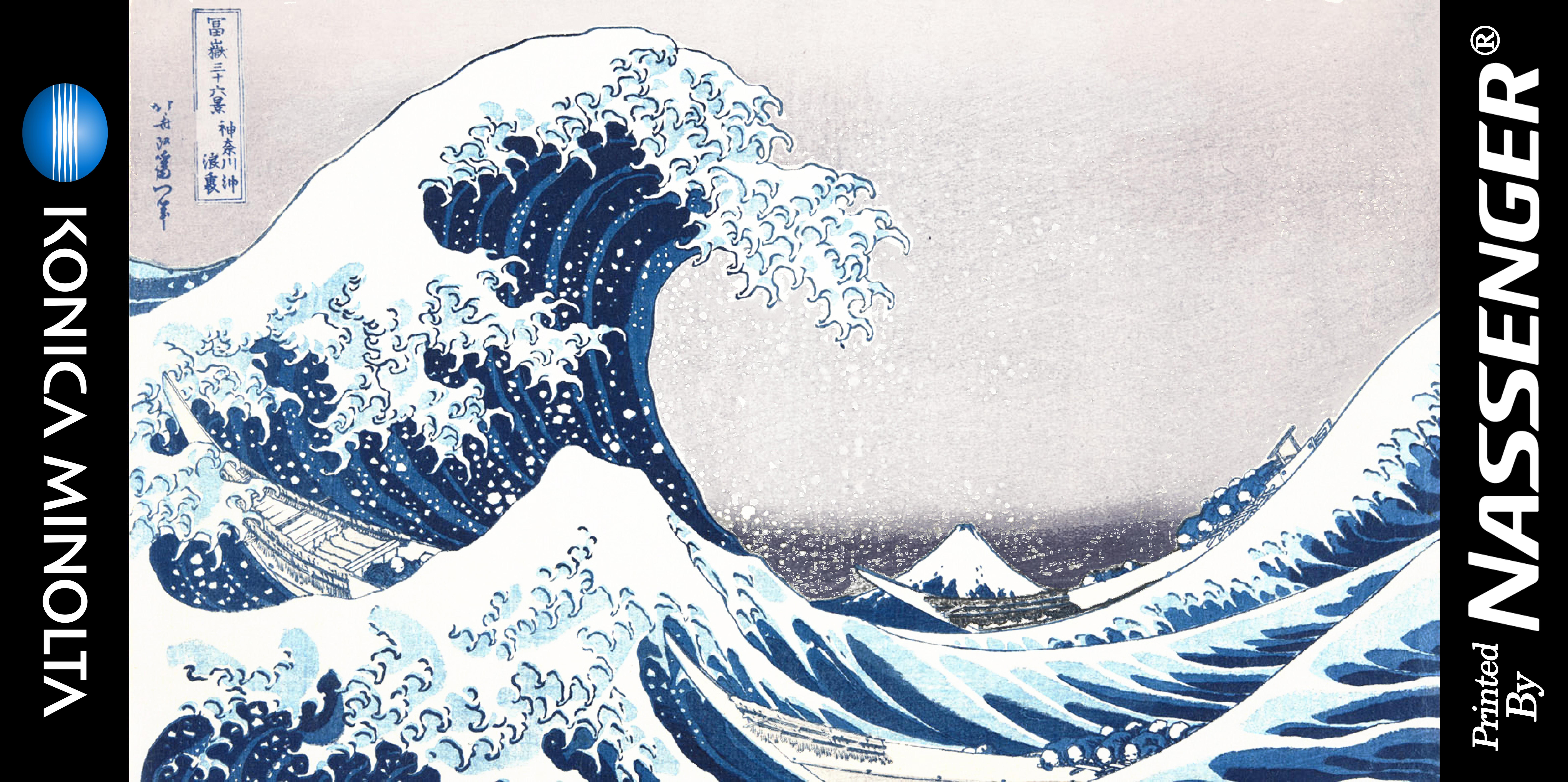
by Katsushika Hokusai. O’ROBE vividly reproduces colors that are hard to achieve.
Concept behind the Name of O’ROBE
O’ROBE was coined by combining “O’” and “ROBE.” “O’” has three meanings: Optimization, One (integration), and Origin (a new start), and “ROBE” means “garments and cloth” in old French. Thus, O’ROBE represents the fusion of fabrics and inks.
It also embodies the concept of the ink, which is to simplify the process by simultaneously completing pretreatment and printing and to offer an optimal ink jet textile printing process.
Commitment to Using Limited Resources Effectively
Konica Minolta has been working on five material issues, including “Using Limited Resources Effectively,” through its business. The Company has also been seeking to reduce the amount of resources used for its products and offer products which help reduce the consumption of earth’s natural resources in society. The Nassenger series inkjet textile printers have helped transform analog textile printing to digital textile printing in the field of dye inks for more than 20 years after market launch. The printers have helped solve environmental issues in the textile industry, including water resources, waste, and climate change.
Konica Minolta aims to improve its corporate value in the medium to long term by steadily addressing sustainability issues.
*Nassenger is a registered trademark of Konica Minolta, Inc.