
 Search within the site
Messages from Outside Directors



Message from the Chairperson of the Board
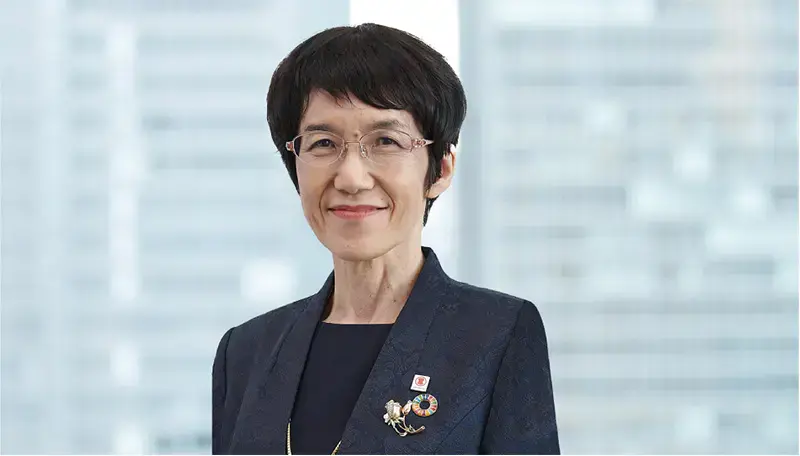
Takuko Sawada Outside Director, Chairperson of the Board
Q1How was the Board of Directors involved in formulating the new Medium-term Business Plan, and how do you view the market's assessment of it?
Since early in fiscal 2025, the Board of Directors has engaged in extensive discussions and exercised oversight, examining not only whether the numerical targets are appropriate but also whether the strategy contributes to the sustainable enhancement of corporate value. Given the increasingly uncertain business environment, we focused our examination on the following points:
- Building a resilient business portfolio capable of withstanding multiple scenarios
- Achieving an optimal balance between improving capital efficiency and investing in growth
- Strengthening strategy execution capabilities and clarifying priorities
- Improving productivity and enhancing decision-making through the use of AI and data
At the same time, from a capital markets perspective, we have continued to emphasize the need for structural reforms in light of changes in the macroeconomic environment. We have also urged executive management to promptly clarify and communicate the Company's equity story.
Regarding the Corporate Plan 2026–2028 (hereinafter, new Medium-term Business Plan), while the market has shown a certain degree of understanding of the direction of Konica Minolta’s transformation, I recognize that we are under close scrutiny regarding the enhancement of profitability in our existing businesses, the pace of our growth story, and the effectiveness of structural reforms, including the utilization of AI. In particular, given that we have not yet sufficiently improved our PBR and capital efficiency, the Board of Directors will exercise even stricter oversight than before.
The Board of Directors has positioned fiscal 2026 as a crucial year for maximizing corporate value and will ensure steady progress in three areas: deepening and accelerating the business portfolio strategy centered on the Business Technologies Business; rigorously monitoring the execution of strategies in existing businesses toward achieving an ROE of 8%; and improving productivity through cross-functional reforms spanning businesses and corporate functions.
In addition, taking into account the growth story of the Industry Business, we will monitor and oversee, from the perspective of capital efficiency, the soundness of strategies, the appropriateness of risk recognition and responses, the rationale for resource allocation, and the use of AI to improve business operations, productivity, and the quality of decision-making. We will rigorously assess not only the progress of measures aimed at enhancing corporate value, but also the actual delivery of concrete results.
Q2What management themes do you consider important in establishing a foundation for long-term growth?
I believe there are five themes the Company should focus on as it works to establish a foundation for long-term growth.
First is redefining what our business portfolio should look like. We will rigorously assess executive management’s decisions in terms of the appropriateness of each business's positioning based on its ROIC and growth potential, the potential to secure and strengthen competitive advantages, and the timeliness of decisions on strategic restructuring involving the industry as a whole.
Second is commercializing themes that will drive future growth. The new Medium-term Business Plan calls for the use of AI and investment in new growth areas, but what matters is turning these initiatives into viable businesses. The Board of Directors will strengthen its support for developing these themes into future earnings pillars by scrutinizing the prioritization and level of focus on investment themes, ensuring clear execution structures and responsibilities, and assessing progress against milestones.
Third is improving efficiency and increasing visibility into and streamlining the management foundation. A prerequisite for growth is to increase visibility into the Company’s organizational structure, which has become increasingly complex as the business has expanded, and reorganize the Company so that it functions as one globally integrated organization. For the Business Technologies Business in particular, strengthening profitability through fundamental structural reforms and productivity improvements is an urgent priority, as stable cash generation through structural optimization and the direction of business model transformation are directly linked to corporate value.
Fourth is strengthening human capital and organizational capabilities. Making business model transformation, including the use of AI, effective will require developing digital talent, reskilling our people, and strengthening organizational capabilities. The Board of Directors will oversee the alignment between human capital strategy and business strategy, accountability arrangements, and the appropriateness of investments, thereby establishing sources of long-term competitiveness.
Fifth is ensuring resilience. With changes and uncertainty in the external environment as a given, decision-making based on multiple scenarios is essential to enhancing the plan's effectiveness. We view greater visibility into risks and more sophisticated decision-making processes as central themes of governance.
Under the leadership of the current President & CEO, the Company has steadily advanced business selection and concentration and built the capabilities needed to deliver on our promises. The Board of Directors will improve the quality and speed of the management’s decision-making and execution, provide constructive engagement and monitoring, and establish a sustainable growth story through dialogue with the capital markets.
Q3What KPIs does the Board of Directors consider most important, and what is its policy for oversight and monitoring?
The Board of Directors considers ROE and ROIC its most important KPIs. These are fundamental indicators closely related to PBR and important measures of how effectively the Company uses capital to create sustainable value. We next place importance on market confidence as reflected in PER, viewing this as an indicator of progress in transforming the business portfolio, increasing earnings contributions from growth areas, and progress in business restructuring.
As a prerequisite for monitoring medium- to long-term KPIs, we require executive management to present management metrics and KPIs based on a breakdown of ROE, and we exercise oversight based on a shared understanding of the overall story for enhancing corporate value. Our basic stance is that executive management takes responsibility for execution, while the Board of Directors focuses on its supervisory role and assesses, from a capital markets perspective, both the effectiveness of execution and the likelihood that it will deliver the intended results. Not only do we support executive management from these perspectives, but we also hold them to clear accountability and responsibility for delivering results aimed at enhancing corporate value.
Message from the Chairperson of the Nominating Committee
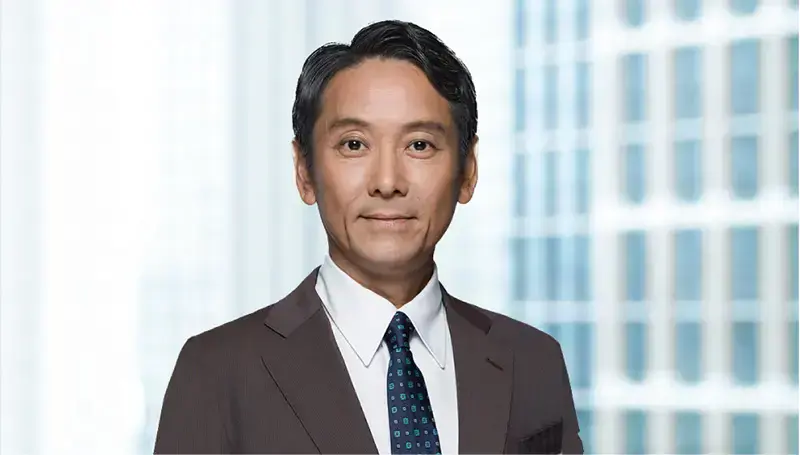
Masumi Minegishi Outside Director
Chairperson of the Nominating Committee
Assessment of management and the management structure during the previous Medium-term Business Plan, and areas for future improvement
Looking back on the previous Medium-term Business Plan, Konica Minolta has steadily strengthened its management foundation— including maintaining and improving cash generation capabilities—through the reorganization of its business portfolio and global structural reforms. My assessment is that management has steadily implemented the policies and measures it set forth and is evolving into a management team that translates its commitments to stakeholders into tangible results.
At the same time, it is clear that there are areas where Konica Minolta must take more decisive action to achieve sustainable growth and meet market expectations. The Board of Directors will monitor even more rigorously the identification of specific growth areas, the clarification of timelines for monetization, the improvement of the accuracy of financial projections in business plans, and the assurance of execution capabilities. Furthermore, market expectations for profitability improvements within a single year are rising; Konica Minolta must demonstrate a clearer commitment and provide a straightforward explanation of the link between its strategy and actual results.
The Company possesses strengths in technology and materials cultivated over many years. Management must ensure these strengths are not confined to the extension of its existing businesses but are instead leveraged to create new business models and revenue opportunities. To do this, management decision-making backed by the ability to formulate business strategies that direct resources toward priority areas is essential, and I believe this will be the key to enhancing the Company’s corporate value.
In terms of governance, discussions incorporating diverse perspectives, including those of Outside Directors, have become firmly established. Going forward, these discussions will be evolved into highly effective monitoring that links to strategic progress, hypothesis verification, capital efficiency, and profitability improvements. Responsibilities will be clarified for each key theme and, through progress management based on verifying the validity of KPIs, execution speed and results will be assessed more rigorously than ever before.
As for the Nominating Committee, we place great importance on future management teams having the ability to conceive and lead transformation, as well as the ability to reliably execute strategies and deliver results. While rigorously assessing the management structure, we will fulfill our responsibility to strengthen governance in a way that leads to sustainable enhancement of corporate value.
Qualities and roles required of the President and management team for executing the new Medium-term Business Plan
Konica Minolta has established the strengthening of business portfolio management and the improvement of profitability in the Business Technologies Business, centered on the office business, as pillars of the new Medium-term Business Plan. Achieving these goals will place rigorous demands on the quality of decisionmaking and the execution capabilities of top management and the management team.
The President is responsible for thoroughly allocating resources from a total Group optimization perspective and ensuring the successful transformation of the business portfolio. I expect the President to clearly prioritize investments based on growth potential and capital efficiency and, for businesses facing structural challenges, to make and execute decisions without delay, including decisions involving fundamental reforms. Particularly in the Business Technologies Business, the ability to demonstrate concrete results in improving the profit structure serves as a key indicator of management’s credibility. In addition, the President is not only responsible for setting strategy but also serves as the chief executor tasked with managing progress, delivering results, and making swift course corrections in response to changes in the business environment; the speed of his/her decision-making and his/her ability to execute will determine Konica Minolta’s corporate value.
I call on the management team to collaborate from a perspective of high expertise and total Group optimization to translate strategy into results. It is essential to operate organizations with a focus on execution—one that maintains a strong commitment to achieving KPIs, responds swiftly, and embraces a transformation-oriented mindset—to prevent any disconnect between planning and execution.
As the Nominating Committee, we will conduct even more rigorous selection and evaluation of top management and other management team members who can fulfill these roles.
Nominating Committee initiatives to build a management structure that will enhance corporate value going forward
It is important to look beyond the Medium-term Business Plan, envision the management structure that will be optimal for Konica Minolta at that time, and systematically build a management foundation that supports sustainable growth.
The Nominating Committee regards evolving the appointment and development of management talent as a critical responsibility. Taking into account changes in the Company’s strategy and business portfolio, the committee will clarify the ideal profile of management talent required over the medium to long term and oversee the development and assignment of personnel based on that profile. Regarding succession planning for key positions, rather than engaging in a merely formal selection of candidates, the committee will verify the existence of a continuous and objective evaluation and development process for multiple candidates and enhance the effectiveness of that process.
Furthermore, without ruling out diverse options, including the appointment of talent from outside the Group, we will verify whether Konica Minolta is successfully balancing speed and diversity through the utilization of talent ready to contribute immediately. In evaluating the management team, we place importance on a multifaceted system that evaluates not only short-term performance but also contributions to medium- to long-term value creation. We will supervise whether the results of these evaluations are appropriately reflected in the management structure and compensation, leading to the clarification of accountability for results and the strengthening of management discipline.
The role of the Nominating Committee is to verify these initiatives from an independent standpoint and to take appropriate actions, including appointment and dismissal, at the appropriate time as necessary.
An effective management structure is a prerequisite for the sustainable enhancement of corporate value, and its results are constantly and rigorously evaluated by the market. The Nominating Committee will also meticulously assess whether Konica Minolta’s human resources strategy and evaluation systems are functioning effectively in light of stakeholder expectations.
Message from the Chairperson of the Compensation Committee
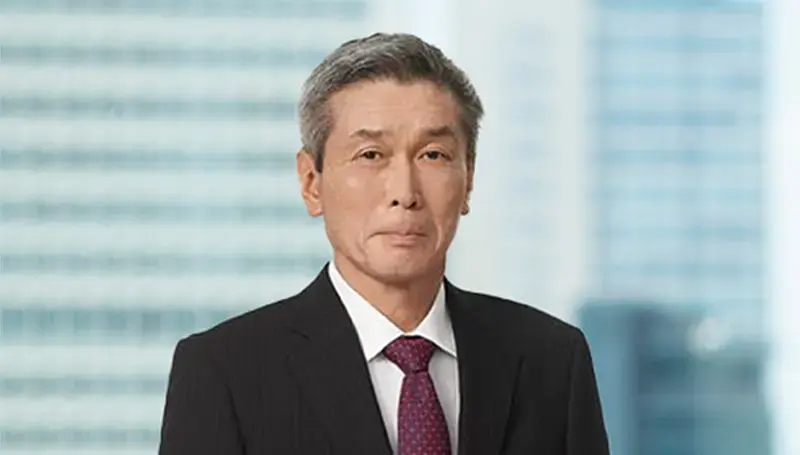
Yoshihiko Kawamura Outside Director
Chairperson of the Compensation Committee
Comprehensive review of the executive compensation
system in conjunction with the launch of the new
Medium-term Business Plan
Konica Minolta operates under the Company with Three Committees system; the majority of its Board of Directors also consists of Outside Directors, giving it one of the strongest corporate governance structures among Japanese companies. Under this system, the Compensation Committee holds the final decision-making authority regarding the executive compensation structure and levels, just as the Nominating Committee has authority over nomination of the President.
Now, we have comprehensively revised the executive compensation system to coincide with the launch of the new Medium-term Business Plan, which runs through fiscal 2028. This revision is driven by the significant changes in the business environment and the Board of Directors’ firm resolve.
Since assuming my role as an Outside Director, I have keenly realized that, compared to companies where I previously served, Konica Minolta’s management team tends to be inward-looking— relatively focused on internal matters—which has created a gap with the business environment. The era of stable, long-term shareholders and purely formal general meetings of shareholders has come to an end; cross-shareholdings have been eliminated, and institutional investors have become the primary shareholders. As a company, is Konica Minolta sufficiently adapting to these changes?
Specifically, the Company lacks a sufficiently capitalmarkets-oriented approach to management—practically speaking, an approach that takes market consensus into account when setting budgets and evaluating financial results. Any listed company must constantly be mindful of market consensus when setting goals and conducting investment, production, and sales activities. For a leading listed company, it is not enough simply to be in the black in its statement of profit and loss. How it measures up against market consensus is what matters most. A lack of alignment between management and market consensus naturally results in harsh reactions from capital markets; this has resulted in a stagnant share price and, consequently, a price-to-book ratio (PBR) of around 0.5.
As a publicly listed company, facing the capital markets head-on is one of the most critical management challenges.
To ensure that the President and other members of senior management remain acutely aware of these management challenges, we have introduced and expanded stock bonuses as a means of aligning their perspective with that of the capital markets. This reflects the Board of Directors’ firm resolve to foster a shift in mindset among management. Under the previous compensation system for top management, performance evaluations included qualitative targets such as ESG criteria, and furthermore, the majority of compensation was paid in cash, with stock bonuses accounting for only a small proportion. Now, we have focused performance evaluations on quantitative performance targets (achievement of budgets and Medium-term Business Plan goals) and increased the proportion of stock bonuses. As a result, top management will be more strongly committed to achieving quantitative performance targets that lead to enhanced corporate value, enabling them to align their perspective with that of the capital markets. This in no way implies that we are downplaying qualitative management goals such as ESG; rather, it is based on the fundamental management principle that management goals should be determined in accordance with the most critical parameters of the management challenges at any given time.
Stronger leadership for management that meets capital market expectations
Of course, simply changing the compensation structure for senior management will not immediately lead to improved corporate performance or higher valuation by the capital markets. Corporate management is built upon the cumulative efforts across a wide range of fields—including manufacturing, sales, R&D, finance and accounting, business strategy, and human resources—and on the combined strength of these efforts. Even within this context, I believe that a company’s leadership—which integrates and directs these activities—is a critically important factor in improving corporate performance and maximizing market value. It is my hope that this revision to the compensation system will serve as a catalyst for this leadership approach, aligning the direction of management with the expectations of the capital markets, ensuring that leadership permeates the front lines, and enabling the entire Group to unite and strive toward achieving the management goals of the new Medium-term Business Plan.
As a publicly traded company, enhancing corporate value is the most important management objective. Otherwise, I believe it would be better for the Company to go private. Konica Minolta must break away from a management style that is inward-looking and preoccupied with internal coordination. Aiming for management that is aligned with capital markets is the foundation of corporate growth. At this critical juncture—when Konica Minolta’s future path hangs in the balance—the Compensation Committee will continue to maintain a stance of strictly holding management accountable for results.