
 Search within the site
Chemical Substances
Basic Concept
There is an international consensus that the impacts of the production and use of chemical substances on both human health and the environment should be minimized. In response, countries around the world are developing and strengthening regulations governing chemical substances.
Based on the precautionary principle and ahead of these international trends, Konica Minolta conducts thorough prior assessments of chemical risks and works to reduce emissions of hazardous substances into the atmosphere as well as eliminate such substances from production processes and products. Through these efforts, the Company helps ensure the safety of stakeholders — including workers in production processes, product users, and people in local communities — while preventing pollution of natural ecosystems.
Strategy
Systems for Eliminating Chemical Risks: Multi-tier Check System
Based on the precautionary principle, Konica Minolta strives to ensure the appropriate management of chemicals.

Step 1:Prohibition and Restriction of Selection and Use Based on the Precautionary Principle
Standards for Chemical Products
Before selecting and using chemical substances, Konica Minolta designates prohibited chemical substances and restricted chemical substances based on the precautionary principle to avoid hazards and toxicity. By eliminating or properly managing these substances at the selection stage, Konica Minolta strives to prevent and reduce impacts on human health and the environment throughout the entire product lifecycle, from raw material procurement through manufacturing, use, and disposal.
Furthermore, since these standards include substances identified as highly hazardous by specialized organizations in addition to those regulated by laws, they help to ensure the safety of the many stakeholders of Konica Minolta's product lifecycle and demonstrate consideration for the natural environment.
Standards for Device Products
To properly manage chemical substances contained in products, Konica Minolta designates prohibited substances and monitored substances based on the laws of each country and international standards. Furthermore, anticipating regulatory trends five years into the future, the company defines controlled substances (substances scheduled for prohibition) to secure transitional preparation periods and minimize inventory losses.
Step 2:Prior Risk Assessment at the Candidate Selection Stage
Konica Minolta has established a system for assessing the risks of new chemical substances at the candidate evaluation stage during the product development process. For the prohibited, restricted, and monitored substances defined in Step 1 (see the Konica Minolta Green Procurement Guidelines for definitions), thorough evaluations are conducted starting with the upstream development stage to enhance the effectiveness of regulatory compliance and minimizing environmental impacts. These substances are eliminated or properly managed during the design and material selection stages.
Through these efforts, Konica Minolta helps ensure appropriate management of product safety, environmental protection, and occupational safety throughout the downstream supply chain.
Step 3:Risk Management Based on Usage Status
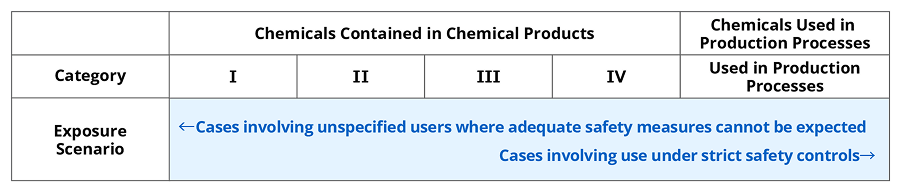
Because risks vary depending on the exposure conditions and conditions of use of chemical substances, Konica Minolta has established five categories of use, ranging from cases involving use under strict safety controls (such as at production sites) to cases involving unspecified users where controlled safety measures are not feasible. Based on these categories, the Company defines safety requirements appropriate to each level of risk, enabling more realistic risk management.
Step 4:Continuous Risk Assessment and Management
Even after incorporating a chemical into production processes and products following risk assessment, Konica Minolta checks periodically to make sure that there are no changes in the amount used or the conditions of use. If there are any changes, a risk assessment is performed again to ensure appropriate management.
Implementations
Green Procurement Implementations
Konica Minolta implements "Green Procurement," based on its own standards for prohibited, restricted, and monitored substances, which take international standards into account, in order to properly manage and communicate the use of hazardous and toxic chemical substances contained in procured items.
For example, the Company designates PFAS (perfluoroalkyl and polyfluoroalkyl substances), which are regulated under international treaties and other frameworks, as prohibited substances in its own product development. Concurrently, the Company identifies and manages information on parts containing PFAS and is systematically replacing them starting with parts where technical and quality alternatives are available.
Through the operation of the SIGMA Green Procurement System, Konica Minolta investigates and manages chemical substances contained in procured items to respond quickly to tightening regulations. At the same time, it monitors trends in regulations and alternative technologies to formulate hazardous substance elimination plans, leading to reliable risk avoidance.
Furthermore, the Company periodically provides suppliers with information regarding trends in environmental laws and regulations (Green Procurement Guidelines) to foster understanding of Konica Minolta's initiatives.
Green Procurement Guidelines:
Environmental Collaboration
The Business Technologies Business has built strong partnerships through its Environmental Collaboration initiative to strengthen suppliers' environmental management. This initiative supports suppliers in establishing independent environmental management systems. In addition to providing guidance on chemical substance management and document management, including the management of measurement results and material information, Konica Minolta provides training for suppliers' employees, conducts examinations, and certifies those who pass as internal environmental auditors within their organizations.
Konica Minolta also conducts environmental assessments of newly established business sites and provides guidance based on the assessment results.
Initiatives to Reduce the Use of Volatile Organic Compounds (VOCs)
Konica Minolta assesses risk based on a chemical's hazardousness and amount of use and is committed to finding alternatives and reducing those substances judged to have a high risk. Since 1993, the Company has set reduction targets for volatile organic compound (VOC) emissions at production sites worldwide.
See Environmental Data in ESG Data for more information:
Countermeasures against Contamination of Soil and Ground Water
Konica Minolta strives to manage the state of contamination through regular monitoring, to facilitate cleanup, and to prevent the spread of contamination.
At sites where soil or groundwater contamination has been discovered, Konica Minolta is carrying out purification of contamination and taking measures to prevent contaminants from affecting the surrounding area and from leaking outside the premises.
We continuously conduct regular groundwater monitoring and report both the results of our purification efforts and the progress of monitoring results to the local government for their confirmation.
Summary of Contaminated Soil or Groundwater at Operation Sites
| Operation Site | Monitored Substance | Progress in Fiscal 2025 |
|---|---|---|
| Sakai Site (Sakai, Osaka) | PCE*1, TCE*2, c-DCE*3, Boron, Lead, Arsenic, Cadmium | The Company has continued to periodically monitor groundwater and, together with the purification of contamination sources, has confirmed that there is no offsite discharge. |
| Osaka Sayama Site (Osaka Sayama, Osaka) | PCE, TCE, c-DCE | The Company has continued to periodically monitor groundwater and, together with the purification of contamination sources, has confirmed that there is no offsite discharge. |
| Mikawa Site, Western Zone (Toyokawa, Aichi Prefecture) | TCE | The Company has continued to periodically monitor groundwater and has confirmed that there is no offsite discharge. |
| Kofu Site (Chuo, Yamanashi Prefecture) | Fluorine | The Company has continued to periodically monitor groundwater and has confirmed that there is no offsite discharge. |
| Konica Minolta IJ Product Co., Ltd. Head Office (Fuefuki, Yamanashi Prefecture) | PCE, TCE, c-DCE | The Company has continued to periodically monitor groundwater and, together with the purification of contamination sources, has confirmed that there is no offsite discharge. |
| Konica Minolta Mechatronics Co., Ltd. Ueta Plant (Toyohashi, Aichi Prefecture) | TCE, c-DCE, Hexavalent Chromium | The Company has continued to periodically monitor groundwater and has confirmed that there is no offsite discharge. |
| Konica Minolta Supplies Manufacturing Co., Ltd. Head Office (Kofu, Yamanashi Prefecture) | PCE, TCE, c-DCE | The Company has continued to periodically monitor groundwater and has confirmed that there is no offsite discharge. |
- *1PCE: tetrachloroethylene (perchloroethylene)
- *2TCE: trichloroethylene
- *3c-DCE: cis-1,2-dichloroethylene (decomposition product of TCE and PCE)