
 Search within the site
Effective Use of Resources
Basic Concept
Konica Minolta identifies "effective use of limited resources" as one of its material issues. With the growth of the global population, resource consumption is increasing every year. Our basic strategy is to address societal needs to minimize resource use and make effective use of resources, viewing these needs from both opportunity and risk perspectives, in order to continue and expand our business.
We have established this strategy as our "Long-Term Environmental Vision" and set up specific initiatives accordingly.
Long-Term Environmental Vision: Effective Use of Limited Resources
We have established a long-term environmental vision to bring the use of natural resources* close to zero by 2050. Specifically, we aim to reduce the amount of resources input into our products and actively shift toward circular resources such as recycled materials and bio-based materials, targeting a reduction of 90% or more in natural resource usage by 2050 (compared to 2019). Through these efforts, we will minimize the use of resources requiring new extraction, contributing to lower environmental impact while mitigating risks in our resource procurement and business model.
*Natural resources: Resources requiring new extraction, such as crude oil and mineral resources (generally synonymous with exhaustible/depletable resources).
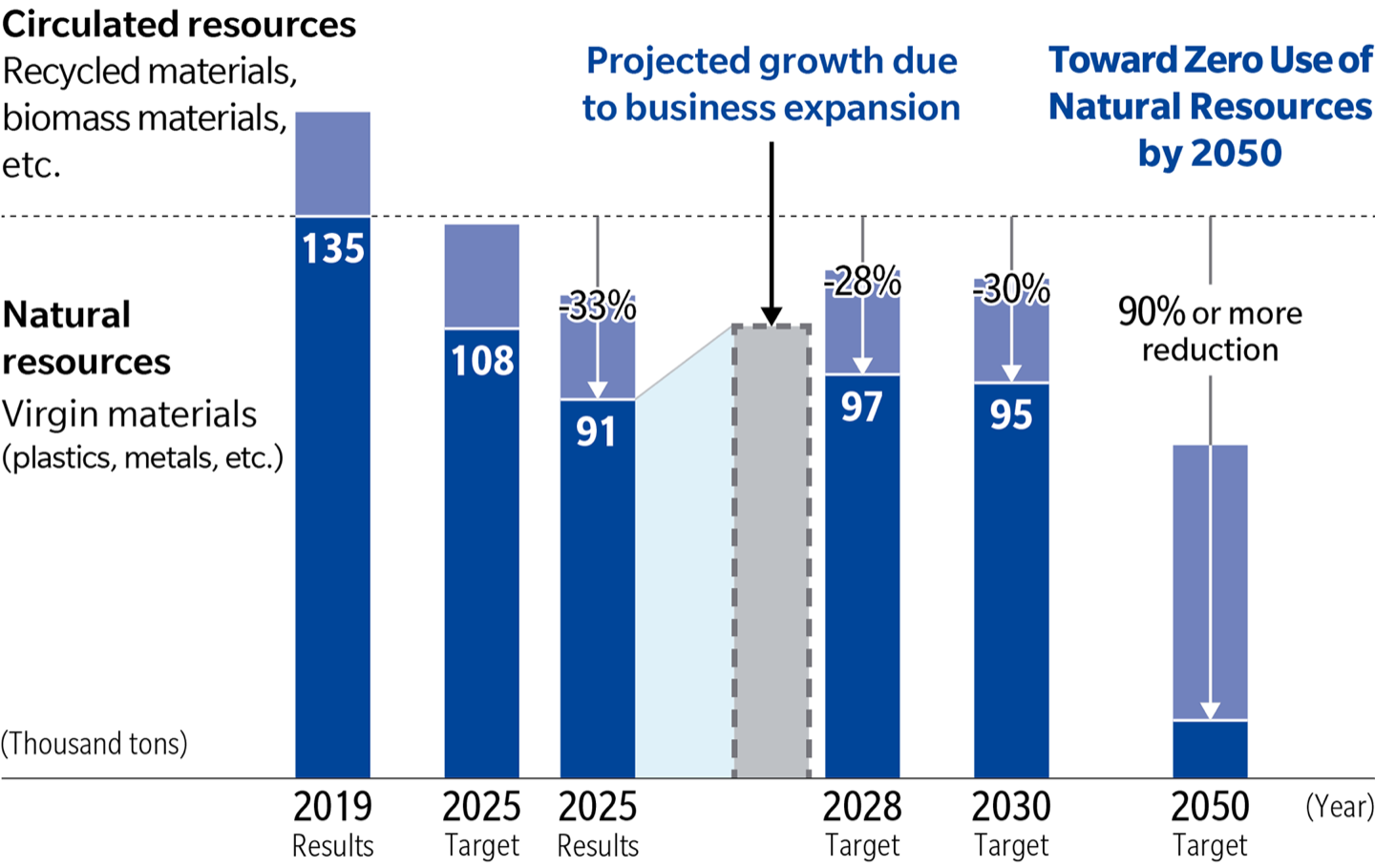
At Konica Minolta, in addition to reducing our own natural resource usage, we will expand our contribution to reducing natural resource usage at customer and societal levels through our products and services to promote the transition to a circular economy across society.
By leveraging Konica Minolta’s strengths—products and solutions capable of transforming processes into on-demand production, along with expanding the application of sensing and materials technologies that promote resource recycling and increase recycled material usage—we contribute to the transition to a circular economy across society.
Strategy, Goals, and Results
Konica Minolta set and worked toward the Medium-Term Environmental Plan 2025 targets as milestones for its Long-Term Environmental Vision. In FY2025, we achieved our targets for both Konica Minolta's use of natural resources and our avoided use of natural resources.
Starting in FY2026 under the Corporate Plan 2026-2028, we have established new target years — 2028, 2030, and 2035 — to drive planned reductions from a medium- to long-term perspective.
Main KPIs
Konica Minolta's Natural Resource Usage
Konica Minolta's natural resource usage includes the natural resources input into product main bodies and packaging during that fiscal year.
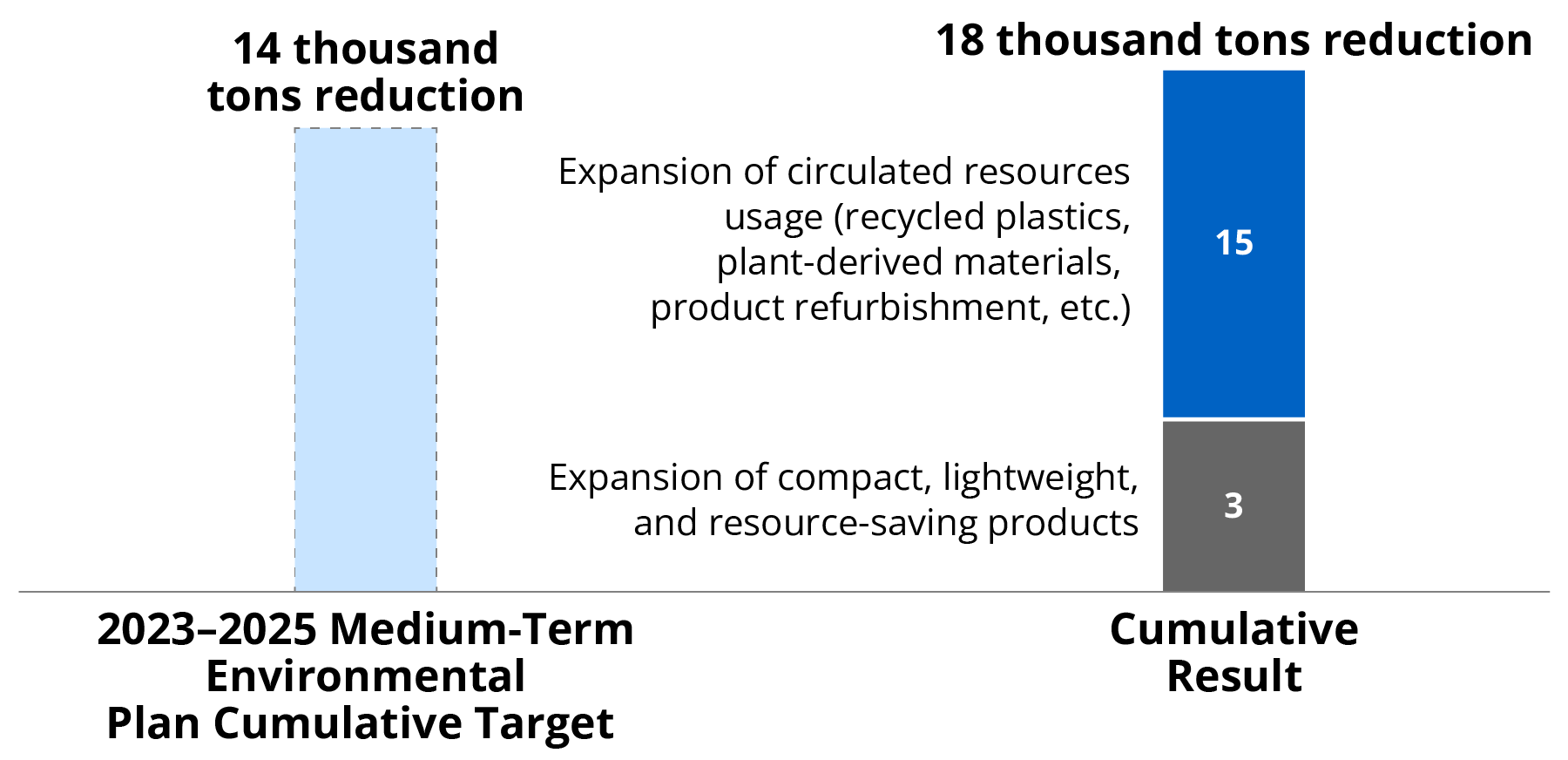
Under the Medium-Term Environmental Plan 2025, Konica Minolta's natural resource usage in FY2025 reached 91 thousand tons (against a target of 108 thousand tons), achieving a resource usage reduction greater than planned. To ensure attainment of this goal, we set "Amount of reduction in Konica Minolta's natural resource usage through measures" as a key performance indicator (KPI). Against a planned reduction of 14 thousand tons of natural resources by FY2025, our actual achievement was a reduction of 18 thousand tons. Significant progress in expanding the use of circular resources was the primary driver of this success.
For our 2028 and 2030 targets — even as resource usage is predicted to rise alongside business growth — we will continue implementing reduction measures that exceed this growth to stay on course to meet our goal of zero natural resource usage by 2050.
Avoided Use of Natural Resources
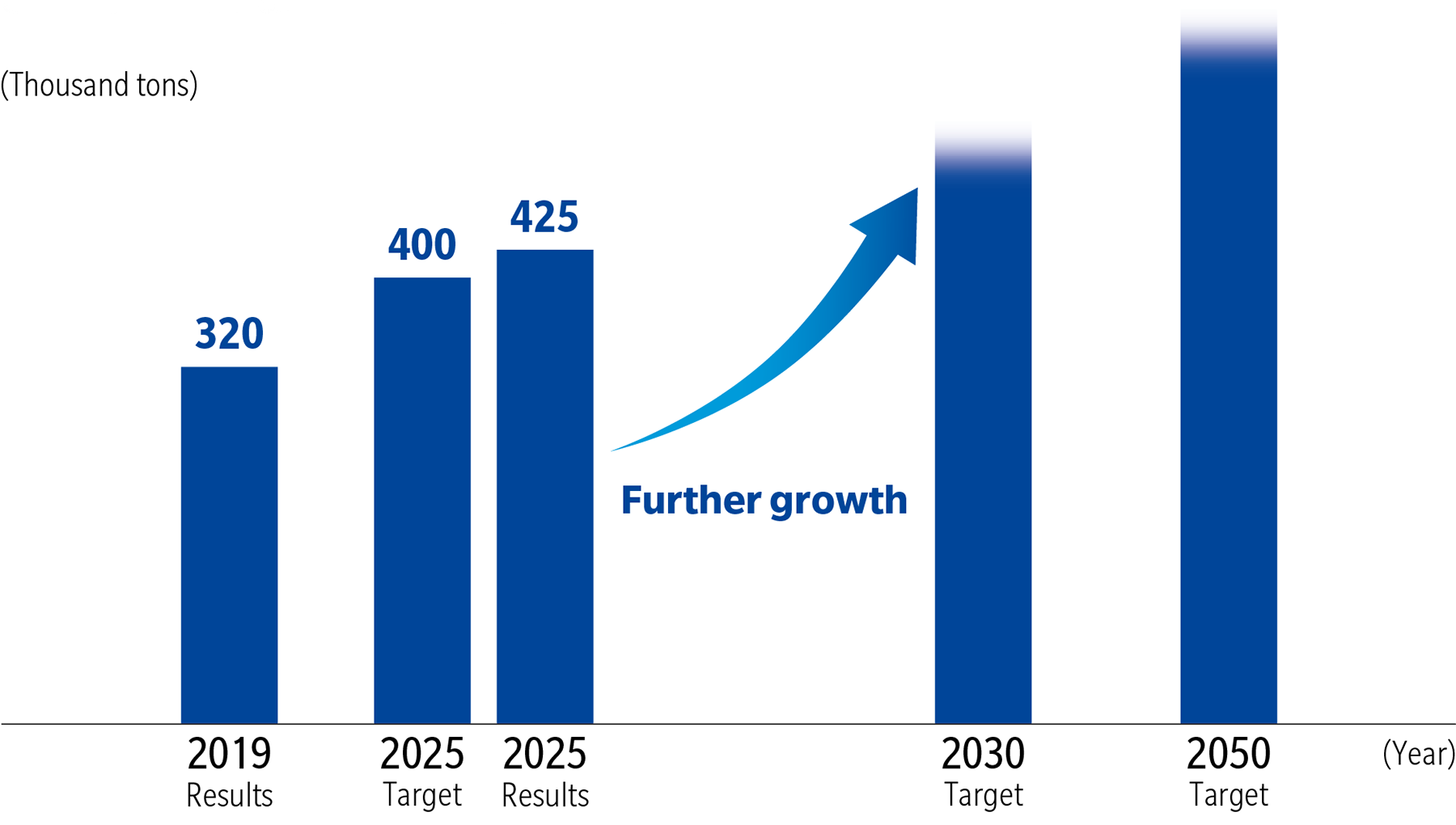
Avoided use of natural resources is defined as the amount Konica Minolta contributes to reducing natural resource usage for customers and society compared to a scenario where Konica Minolta products were not adopted. For example, this includes resource savings from eliminating conventional platemaking processes in our primary Professional Printing Business, as well as resources saved through material recycling of plastics enabled by our hyperspectral imaging technology.
Under the Medium-Term Environmental Plan 2025, our contribution to natural resource usage reduction reached 425 thousand tons in FY2025 (against a target of 400 thousand tons), exceeding the plan.
Heading toward 2050, we will commercialize proprietary sensing and AI technologies to create intelligent recycled materials (recycled plastic materials with superior supply and quality stability), productivity enhancement technologies for perovskite solar cells, and process monitoring technologies for bio-manufacturing (under joint research with Japan’s National Institute of Advanced Industrial Science and Technology). Through these innovations, we will further expand our avoided use of natural resources across customer operations and society.
Initiatives
 Products / Solutions
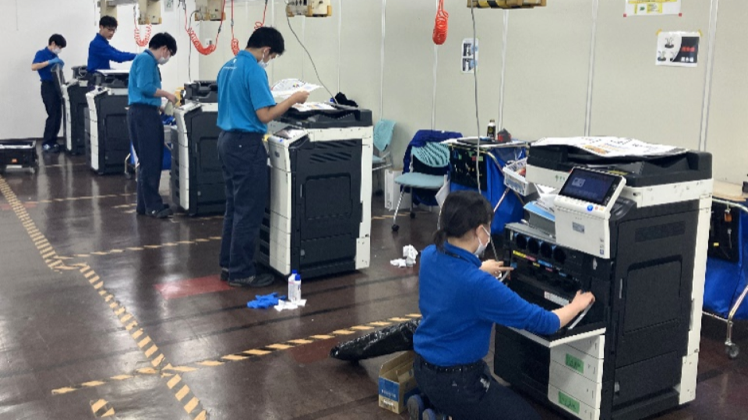
Konica Minolta collects products previously sold in the market and actively repurposes them for reuse.
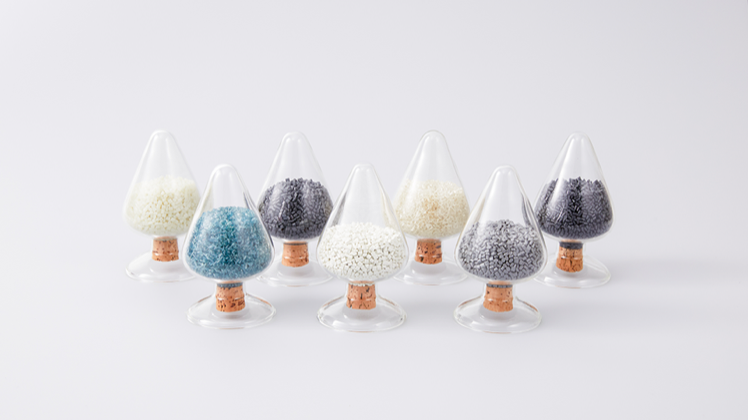 Products / Solutions
We continuously create products that reduce natural resource usage, as well as products and solutions that contribute to overall resource reduction across society.
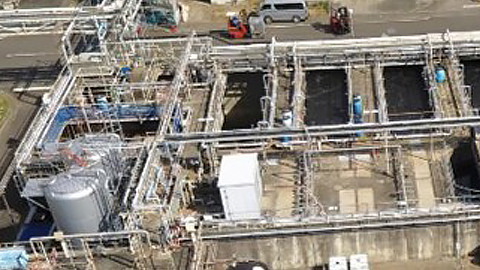 Production
As a manufacturer, Konica Minolta thoroughly pursues the effective use of resources and reduction of emissions in its production processes.
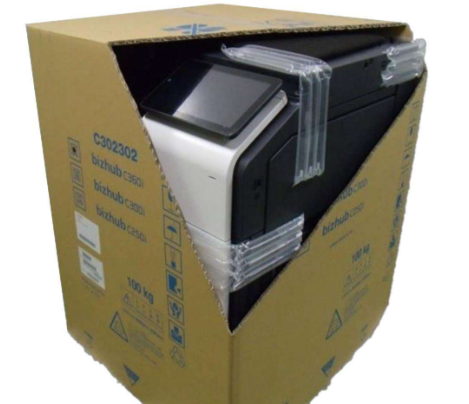 Logistics
Through in-house technology development, we are also advancing the effective use of natural resources in the packaging materials used during product logistics.