
 Search within the site
Promoting Energy Conservation at Production Sites
Initiatives related to
Climate Change
Optimization of Energy Use
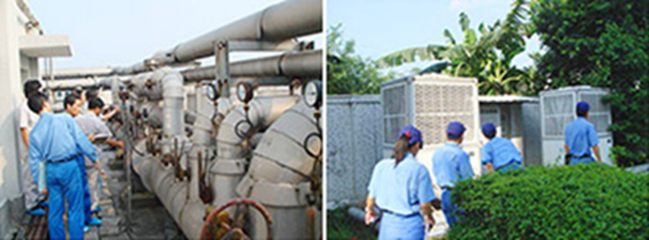
Since 2010, Konica Minolta has set targets for reducing CO2 emissions through energy conservation at its major production sites. The company has pursued both reductions in environmental impact and cost savings through energy conservation by working closely with personnel on-site, conducting thorough measurements and visualization, and improving and transforming production processes. Building on these activities, Konica Minolta will continue to further reduce energy consumption and improve energy efficiency.
For details on energy conservation targets at major production sites, please refer to the following:
Examples of Major Energy Conservation Measures
| Productivity improvement | Industrial engineering (IE) work analysis, yield improvement, introduction of automated equipment, takt time reduction, optimization of production space |
|---|---|
| Optimization of equipment operating hours | Equipment shutdown during non-operating hours, reduction of standby power consumption |
| Optimization of air-conditioning operation | Optimization of temperature settings and operating hours |
| Energy conservation in lighting | Reduction in the number of lights used, replacement with high-efficiency lighting |
| Energy conservation in molding machines | Introduction of servo motors, cylinder insulation, infrared heating |
| Energy conservation in compressed-air systems | Use of inverter drives, control of the number of operating units, optimization of air pressure |
| Optimization of chiller operation | Consolidation of chillers, optimization of outlet temperature settings |
| Waste heat utilization | Heat exchange between exhaust and intake air, reduction of steam production through the use of waste heat from dehumidifiers |
| Reduction of heat loss | Insulation of steam piping, consolidation of piping, reduction of valve leakage |
Examples of Initiatives
Introducing State-of-the-Art Energy-Efficient Equipment
(Konica Minolta Mechatronics Co., Ltd.)
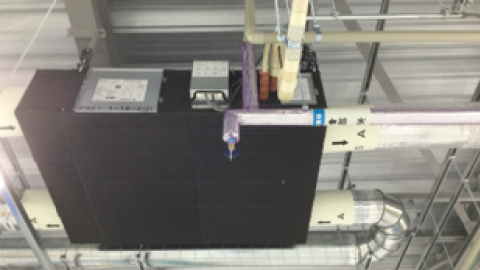
Konica Minolta Mechatronics Co., Ltd. has introduced state-of-the-art high-efficiency equipment, including a large temperature difference air conditioning system, two chillers, direct expansion coil-type total heat exchangers, and LED lighting. These measures have achieved annual CO2 emissions reductions of more than 400 metric tons compared with conventional equipment.
Pursuing Energy Savings by Reviewing the Operation of Clean Rooms with High Energy Loads
(Konica Minolta Business Technologies (Dongguan) Co., Ltd.)
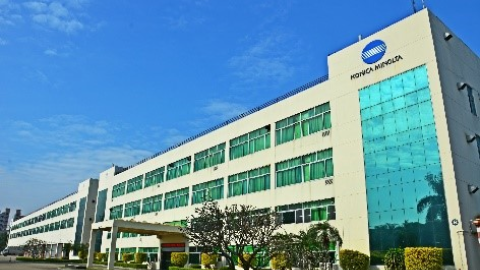
Konica Minolta Business Technologies (Dongguan) Co., Ltd., which manufactures multi-functional peripherals (MFPs) and other products in Dongguan, Guangdong Province, China, is working to improve the operation of energy -intensive clean rooms at its factory. Specifically, the company has reviewed temperature and humidity conditions within the range permitted by product specifications, optimized ventilation frequency while maintaining the required level of cleanliness, reduced clean room equipment operating hours through the use of timers, and reduced clean room floor space by revising layouts. In conjunction with these layout improvements, the company is also reducing energy consumption by consolidating and shutting down cooling towers and improving energy efficiency through equipment upgrades. These initiatives implemented through 2025 have resulted in CO2 emissions reductions of approximately 400 metric tons.
Advancing Energy Conservation Through Waste Heat Utilization and Operational Optimization (Konica Minolta Supplies Manufacturing Co., Ltd.)
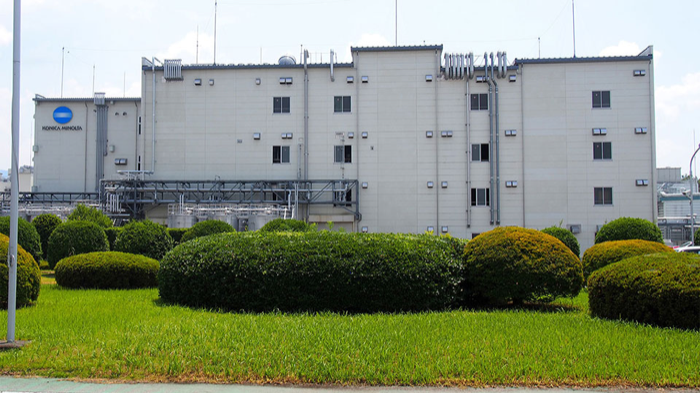
With its head office in Kofu, Yamanashi Prefecture, Konica Minolta Supplies Manufacturing Co., Ltd. makes developers and photosensitive drums for multi-functional peripherals (MFPs). The company has achieved sharp reductions in energy consumption by utilizing the waste heat from the toner production process and curbing the heat dissipation from steam pipes.
The company also installed an automated control system to supply steam only when and in amounts needed to prevent heat from dissipating from the pipes.
Furthermore, the company is rolling out measures such as reviewing drying conditions via inverter control across its factories, while also taking operational approaches like revising production plans to improve efficiency beyond mere equipment upgrades.
Pursuing Energy Savings with High-Efficiency Air Conditioning Systems and Other Energy-Saving Measures (Konica Minolta Business Technologies (Malaysia) Sdn. Bhd.)
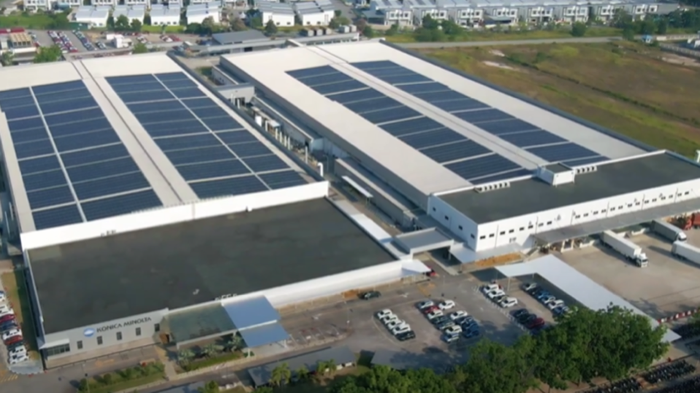
Konica Minolta Business Technologies (Malaysia) Sdn. Bhd., which assembles MFPs and performs other manufacturing operations in Malaysia, has introduced large-temperature-difference and stratified air-conditioning systems to reduce electricity consumption compared with conventional air-conditioning systems, as Malaysia has a tropical climate that requires frequent use of air conditioning.
In addition, the company has introduced vented cylinders in the molding process that remove moisture and gases contained in resin during molding. This eliminates the resin-drying process previously required before materials were fed into the molding equipment, resulting in significant energy savings and improved productivity.
Advancing Energy Conservation through the Establishment of a New Building
(Konica Minolta IJ Product Co., Ltd.)
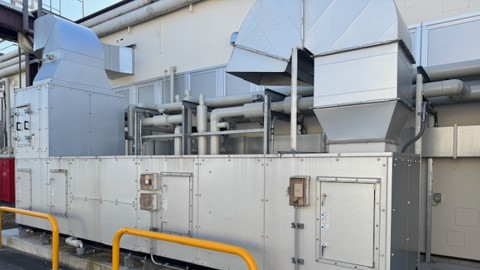
Konica Minolta IJ Product Co., Ltd., which manufactures precision optical devices and inkjet heads in Fuefuki City, Yamanashi Prefecture, is advancing its energy conservation efforts in conjunction with the establishment of a new building, through both the introduction of state-of-the-art energy-efficient equipment and improvements in equipment operation. Specifically, the company has reduced energy consumption associated with the equipment by replacing steam humidifiers with evaporative humidifiers that require no electricity. In addition, the consolidation of factory operations has improved production efficiency and energy intensity. The company is also optimizing operations, including shutting down air conditioning in areas no longer in use as operations are consolidated into a smaller area.