
 Search within the site
Supply Chain Management
Basic Concept
Konica Minolta is committed to improving sustainability not only in terms of its own products but also throughout its supply chain, based on relationships of trust with suppliers.
Based on relationships of trust with suppliers, Konica Minolta believes that improving sustainability not only in terms of its own products but also throughout the entire supply chain is crucial. The Company positions suppliers involved in the supply of raw materials and parts, production, logistics, and services as essential partners in business activities and strives to establish strong relationships of trust by ensuring fair and transparent transactions.
Products and services are supported by a supply chain that spans diverse regions and processes. This process is closely linked to various social issues, such as concerns about forced labor, child labor, working environments, occupational health and safety, environmental impact, and corporate ethics. Therefore, Konica Minolta practices appropriate management and problem-solving across the entire supply chain, extending beyond the Company itself. By providing products and services that customers can select with peace of mind, the Company aims to achieve “the creation of shared value.”
To achieve these goals, Konica Minolta has established the Konica Minolta Group Human Rights Policy and the Konica Minolta Procurement Policy as policies and standards for the supply chain, along with the Konica Minolta Supply Chain Code of Conduct, which is based on the RBA* Code of Conduct. By requesting suppliers to comply with these standards, the Company promotes appropriate management and continuous improvement in the fields of labor (human rights), health and safety, the environment, and ethics. Furthermore, the procurement of mineral resources is positioned as a critical issue. Acknowledging that human rights abuses in conflict-affected and high-risk areas and the funding of armed groups have become international challenges, Konica Minolta has established the Konica Minolta Responsible Minerals Procurement Policy and is moving forward with its response to this issue.
Based on these policies and standards, Konica Minolta systematically promotes initiatives for sustainable procurement and responsible minerals sourcing across the entire supply chain. Through a series of activities — including embedding requirements among suppliers, identifying and assessing risks, and supporting corrective actions and improvements — the Company seeks to build a fully responsible supply chain.
*RBA (Responsible Business Alliance): A non-profit organization primarily centered on the electronics industry, which strives to promote responsible business practices in global supply chains.
Konica Minolta Procurement Policy
The Konica Minolta Group pursues customer satisfaction by creating innovative products and services that contribute to the development of society, according to our management philosophy, "The Creation of New Value." In procurement activities, we establish firm partnerships with our suppliers based on fairness and transparency, and aim to build a sustainable society by fulfilling social responsibilities with our suppliers.
1. OPEN
We will build transparent and reliable relationships with our suppliers and manage procurement in an open manner, while sharing objectives from a long-term and global perspective.
2. FAIR
We will carry out transactions under the principle of free competition with rational evaluation criteria, and seek mutual benefit with suppliers.
3. GLOBAL
We will have a global outlook and carry out procurement in the regions that best suit our operational needs.
4. COMPLIANCE
We will comply with all relevant laws and regulations, corporate ethics, and internal policies and regulations.
5. ECOLOGY
We will contribute to the international society and local communities by striving to take the lead in environmental protection, while reducing the impact of our operations on ecosystems.
Requests to Suppliers
Based on strong partnerships with our suppliers, we ask our suppliers to focus on the following areas in order to increase customer satisfaction and fulfill social responsibilities.
1. Excellent quality
Ensuring the safety of products and services, including compliance with the safety standards of each country and region, and improving quality to meet the demands of customers
2. Reasonable prices
Pursuing prices with market competitiveness
3. Response to changes in demand
Developing a stable supply system that can respond flexibly to changes in demand
4. Compliance with laws, regulations, and corporate ethics
Complying with all laws and regulations of each country and region, and with corporate ethics
5. Environmental protection
Undertaking environmentally conscious business activities and material procurement
6. Respect for the human rights of workers
Respecting basic human rights, including the prohibition of child labor, forced labor, and discrimination based on ethnicity, gender, and any other grounds
7. Health and safety
Providing safe and clean work environments
8. Information security
Continuously improving information security
9. Firm management foundation
Building a firm management foundation to ensure a continuous and stable supply of materials
April 1, 2022

Toshimitsu Taiko
Konica Minolta, Inc.
President and CEO
Konica Minolta Supply Chain Code of Conduct
- Konica Minolta Supply Chain Code of Conduct (Japanese)PDF file, opens in a new window
- Konica Minolta Supply Chain Code of Conduct (English)PDF file, opens in a new window
- Konica Minolta Supply Chain Code of Conduct (Chinese)PDF file, opens in a new window
For languages other than those listed above, please refer to the RBA Code of Conduct.
Konica Minolta Responsible Minerals Procurement Policy
As a global company with a supply chain all over the world, Konica Minolta will work on responsible mineral procurement to prevent serious risks such as human rights abuses that may occur in connection with the mining, trading, handling and export of minerals from Conflict-Affected and High-Risk Areas*1.
Examples of Conflict-Affected and High-Risk Areas are the Democratic Republic of Congo (DRC) and adjoining countries. There are concerns that the conflict mineral*2 and the minerals such as cobalt mined in this region could be used to fund armed groups, fueling human rights abuses and environmental destruction.
To address this international problem, Konica Minolta is determined to refrain from purchasing products, parts, or materials using minerals related in risk listed in OECD Guidance Annex II*3 such as human rights abuses and bribery in Conflict-Affected and High-Risk Areas. By referring to the OECD Guidance, Konica Minolta has constructed a group-wide system for implementing this responsible mineral policy, carries out responsible mineral surveys throughout its supply chain, conducts due diligence*4.
Suppliers are required to cooperate with these responsible minerals approach and activities of Konica Minolta. Based on strong partnerships, Konica Minolta expects supplier's support to avoid products, parts, or materials containing the minerals related to serious risks such as human rights abuses and bribery by sourcing minerals from smelters or refiners determined to be compliant with the Responsible Minerals Assurance Process (the “RMAP”) protocols established by the Responsible Minerals Initiative (the “RMI”). In the event that we identify minerals that contribute to fund conflicts or relate to serious risks such as human rights abuses, we will request our suppliers to take measures. Depending on the correction situation, we will take appropriate counter measures that may ultimately lead to termination of business with such supplier.
Yasuhiro KAWASUGI
Director, Corporate Strategic Planning Division
KONICA MINOLTA, INC.
April 1, 2025
- *1Conflict-affected and high-risk areas: identified by the presence of armed conflict, widespread violence or other risks of harm to people. Details follow the OECD definition.
- *2Conflict mineral(s): cassiterite (the metal ore of tin), coltan (the metal ore of tantalum), gold, wolframite (the metal ore of tungsten), or their derivatives.
- *3OECD Guidance Annex II: the OECD Due Diligence Guidance for Responsible Supply Chains of Minerals from conflict affected and high-risk areas (the “OECD Guidance”) Annex II: This Guidance is for use by any company potentially sourcing minerals or metals from conflict-affected and high-risk areas. Annex II stipulates the following risks to avoid for responsible mineral procurement:
- serious abuses associated with the extraction, transport or trade of minerals
- direct or indirect support to non-state armed groups
- public or private security forces
- bribery and fraudulent misrepresentation of the origin of minerals
- money laundering
- the payment of taxes, fees and royalties to governments
- *4Due diligence for conflict minerals: the steps in order to prevent or mitigate adverse impacts, to identify and assess risks of human rights abuses based on factual surveys of minerals supply chain.
Structure
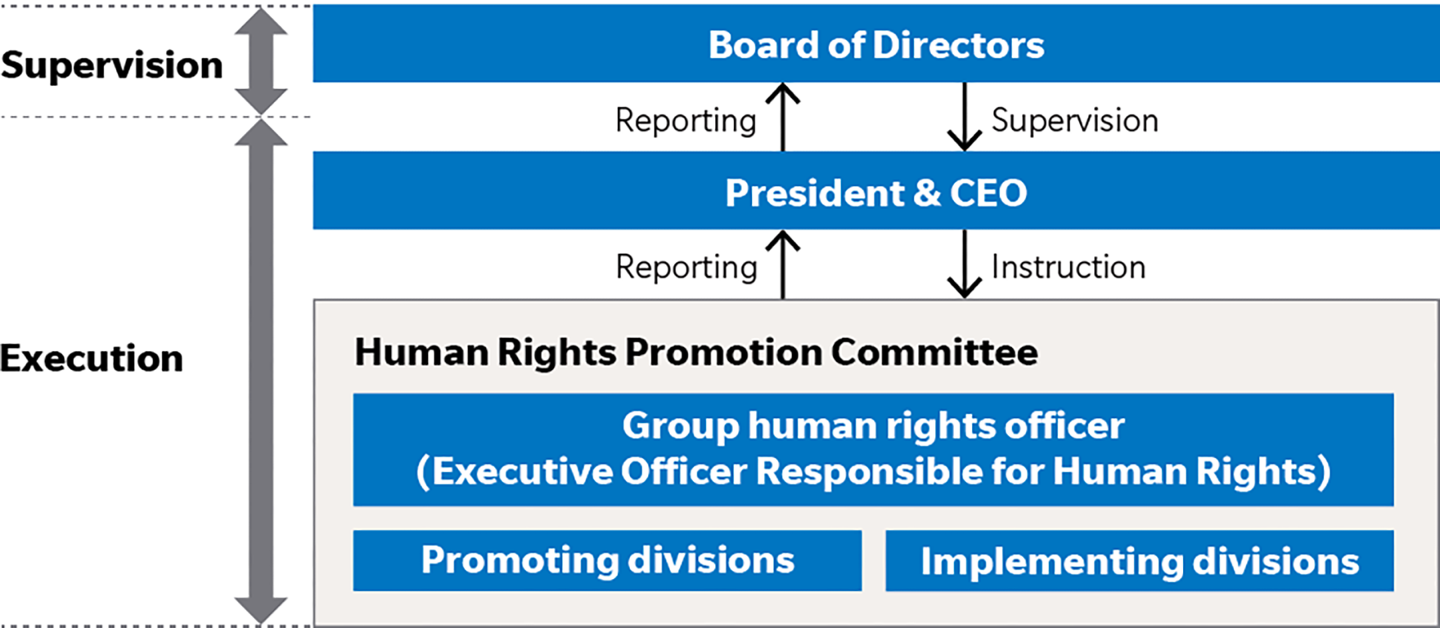
Konica Minolta has established a structure to promote sustainability initiatives across the entire supply chain on a cross-functional, group-wide basis.
Under the leadership of the Group Human Rights Officer (Executive Officer for Human Rights) appointed in fiscal 2026, Konica Minolta's initiatives to respect human rights are driven primarily by the Corporate Strategic Planning Division, which oversees sustainability, in coordination with promoting divisions such as corporate divisions and business units.
Starting in fiscal 2026, the Company established the Human Rights Promotion Committee to oversee human rights initiatives across the Group, with the goal of strengthening efforts to ensure respect for human rights is practiced across the Group. Supply chain sustainability initiatives are also integrated, executed, and managed within the framework of the Human Rights Promotion Committee. Specifically, under this committee, relevant departments collaborate to promote activities such as identifying and addressing risks related to human rights and labor, health and safety, the environment, and ethics at suppliers, verifying compliance with the Supply Chain Code of Conduct, and providing support for corrective actions.
Furthermore, the Company works to strengthen its governance structure by having the Group Human Rights Officer report the status of these initiatives and critical issues to the Board of Directors via the President and CEO.
Sustainable Procurement Initiatives
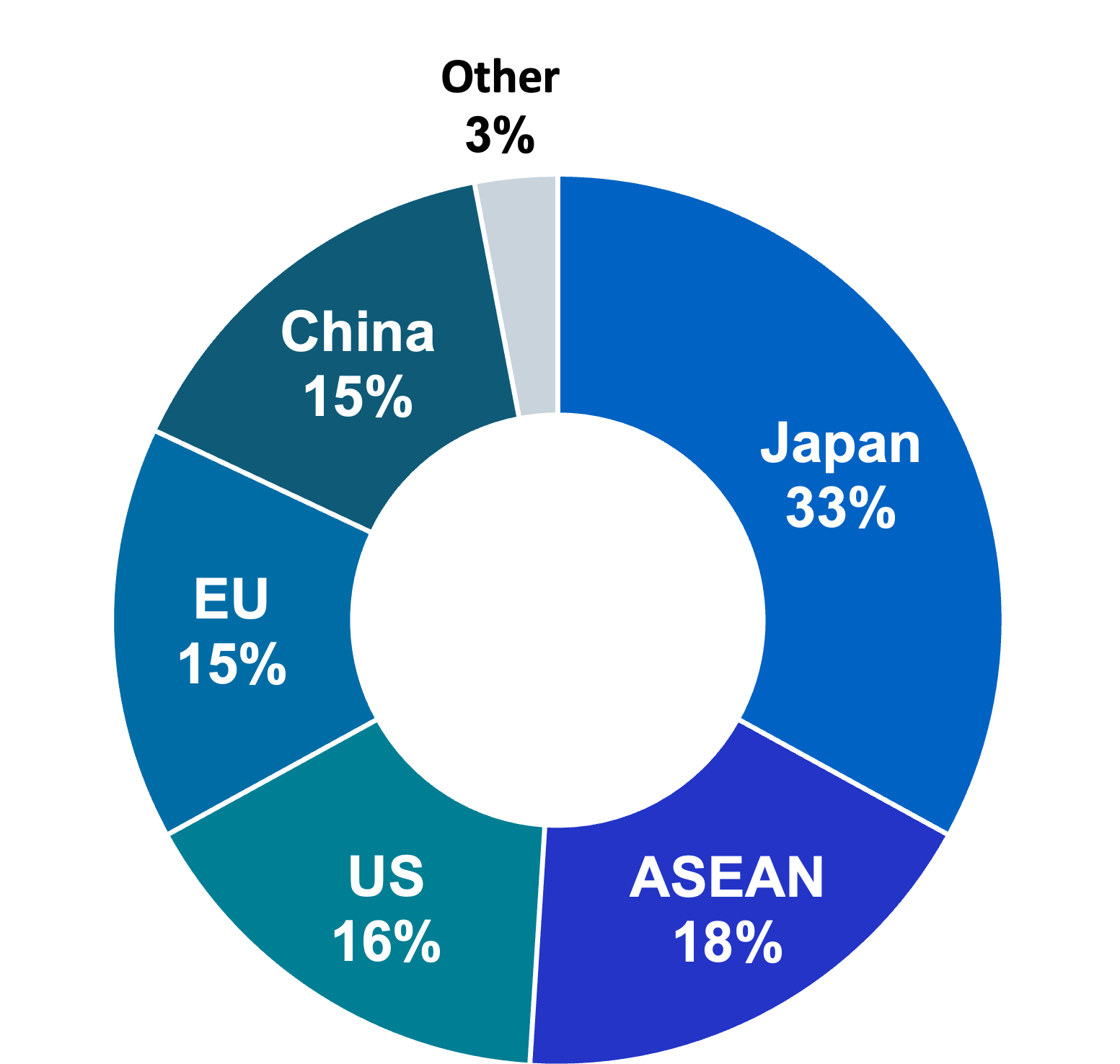
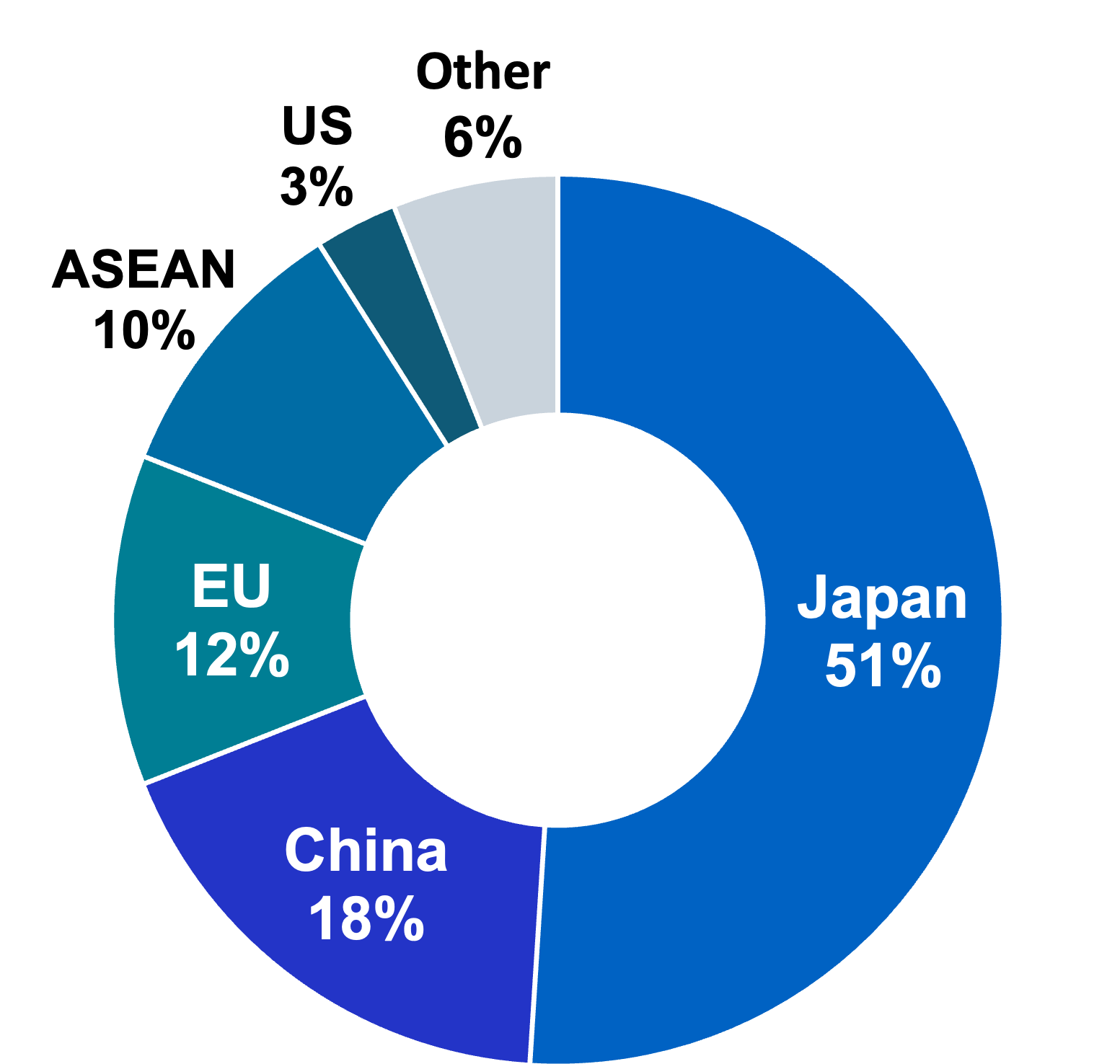
Konica Minolta operates procurement activities globally. The Group's total procurement value amounts to approximately 550 billion yen, with approximately 2,500 suppliers. Regionally, procurement is conducted widely, centered on Japan, ASEAN, Europe, the United States, and China, establishing a supply chain supported by diverse regions and suppliers.
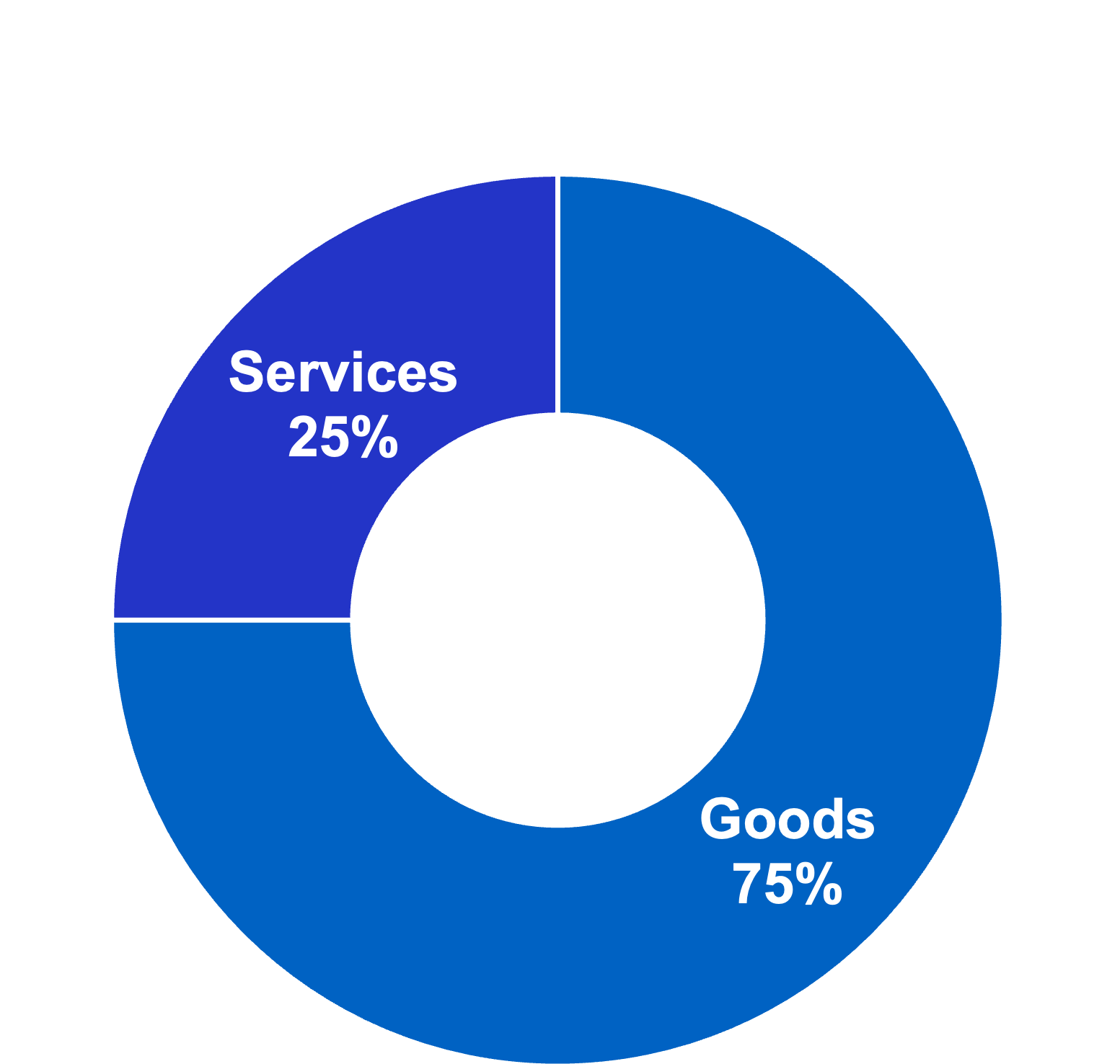
Procurement items are broadly categorized into parts and raw materials used directly in production (direct materials) and goods and services related to business operations and development (indirect materials). In procuring direct materials, the Company focuses on regionally optimized procurement, primarily sourcing from regions close to production sites, to reduce logistics costs and environmental impacts. On the other hand, for parts requiring advanced technology or high quality, the Company selects the most suitable global suppliers to ensure a stable and high-quality supply.
In indirect materials procurement, Konica Minolta conducts optimal sourcing adapted to the actual conditions of each region and site. The Company promotes procurement that considers environmental and social impacts alongside cost and quality. Through these initiatives spanning both direct and indirect materials, the Company balances business efficiency with sustainability.
Under this procurement structure, risks inherent in the supply chain are diversifying. Alongside issues concerning working environments, human rights, environmental impact reduction, legal compliance, and corporate ethics, responding to supply disruption risks caused by natural disasters or infectious diseases has taken on increased importance.
To address these risks and enhance the sustainability and resilience of the entire supply chain, Konica Minolta systematically promotes its procurement activities as sustainable procurement. Starting with sharing requirements based on policies and codes of conduct, the Company drives a series of initiatives that lead to identifying and assessing risks and correcting and improving issues through collaboration with suppliers.
Targets, Results, and Initiatives of the Sustainable Procurement Promotion Program
To identify risks and ensure continuous improvement across the entire supply chain, the Company systematically organizes its procurement initiatives.
Konica Minolta systematizes its sustainable procurement initiatives using its Sustainable Procurement Promotion Program to address supply chain challenges and achieve continuous improvement.
An outline of each activity under the program follows.
Sustainable Procurement Requests
Konica Minolta shares requirements based on policies and codes of conduct with suppliers to build a common foundation across the entire supply chain.
To establish common standards across the entire supply chain, Konica Minolta deploys specific requirements based on its policies and codes of conduct to suppliers.
In this initiative, the Company requests all primary suppliers to comply with the Konica Minolta Procurement Policy, the Konica Minolta Supply Chain Code of Conduct, and the Konica Minolta Responsible Minerals Procurement Policy. Simultaneously, the Company encourages primary suppliers to implement similar initiatives upstream in the supply chain. To verify compliance, Konica Minolta collects written agreements and reviews the status of supplier initiatives, comprehensively evaluating whether practices align with the Company's policies and standards.
These requests are made in conjunction with revisions to policies and codes of conduct, ensuring that updates are communicated to suppliers and fully understood. Through these efforts, Konica Minolta shares and establishes standards across the entire supply chain, working to strengthen the foundation for sustainable procurement.
| KPI | Results | Targets | |||
|---|---|---|---|---|---|
| FY2023 | FY2024 | FY2025 | FY2025 | FY2028 | |
| Response rate to sustainable procurement requests |
100% | 81.9% | 91.1% | 100% | 95% |
Supplier Risk Assessment
Konica Minolta conducts risk assessments using an SAQ* for critical suppliers selected based on transaction value and the scale of ESG risks. This process identifies inherent risks in the supply chain and clarifies response priorities.
*SAQ (Self-Assessment Questionnaire)
Konica Minolta conducts supplier risk assessments in stages to systematically assess inherent supply chain risks and clarify response priorities.
Rather than evaluating all suppliers uniformly, this initiative targets specific suppliers based on their business impact and risk level, facilitating efficient and highly effective risk identification. Specifically, the Company visualizes and prioritizes supply chain risks through two steps: selection of critical suppliers and risk assessment via SAQ.
Selection of critical suppliers
From its supplier base, Konica Minolta selects primary suppliers that cover approximately the top 80% of total procurement value as "critical suppliers," based on transaction amounts and supply chain impact. In addition, the Company adds suppliers to the evaluation target as necessary, considering impacts on production continuity — such as whether they handle critical components or whether there are alternative suppliers — as well as risk perspectives specific to countries/regions, business sectors, products, corporate governance, society, and the environment. This ensures the selection encompasses suppliers that are vital from a risk perspective, moving beyond value-based metrics alone. When a primary supplier is a trading company or distributor, the Company endeavors to understand the true state of the supply chain by tracing back to upstream suppliers responsible for actual manufacturing to conduct risk assessments.
Furthermore, while this initiative primarily targets direct materials suppliers, indirect materials suppliers are also included based on risk. Specifically, the Company identifies and assesses suppliers closely involved in business activities, such as on-site contractors and temporary staffing agencies at major manufacturing sites.
Risk assessment via SAQ
For the selected critical suppliers, Konica Minolta conducts risk assessments using an SAQ based on the RBA framework.
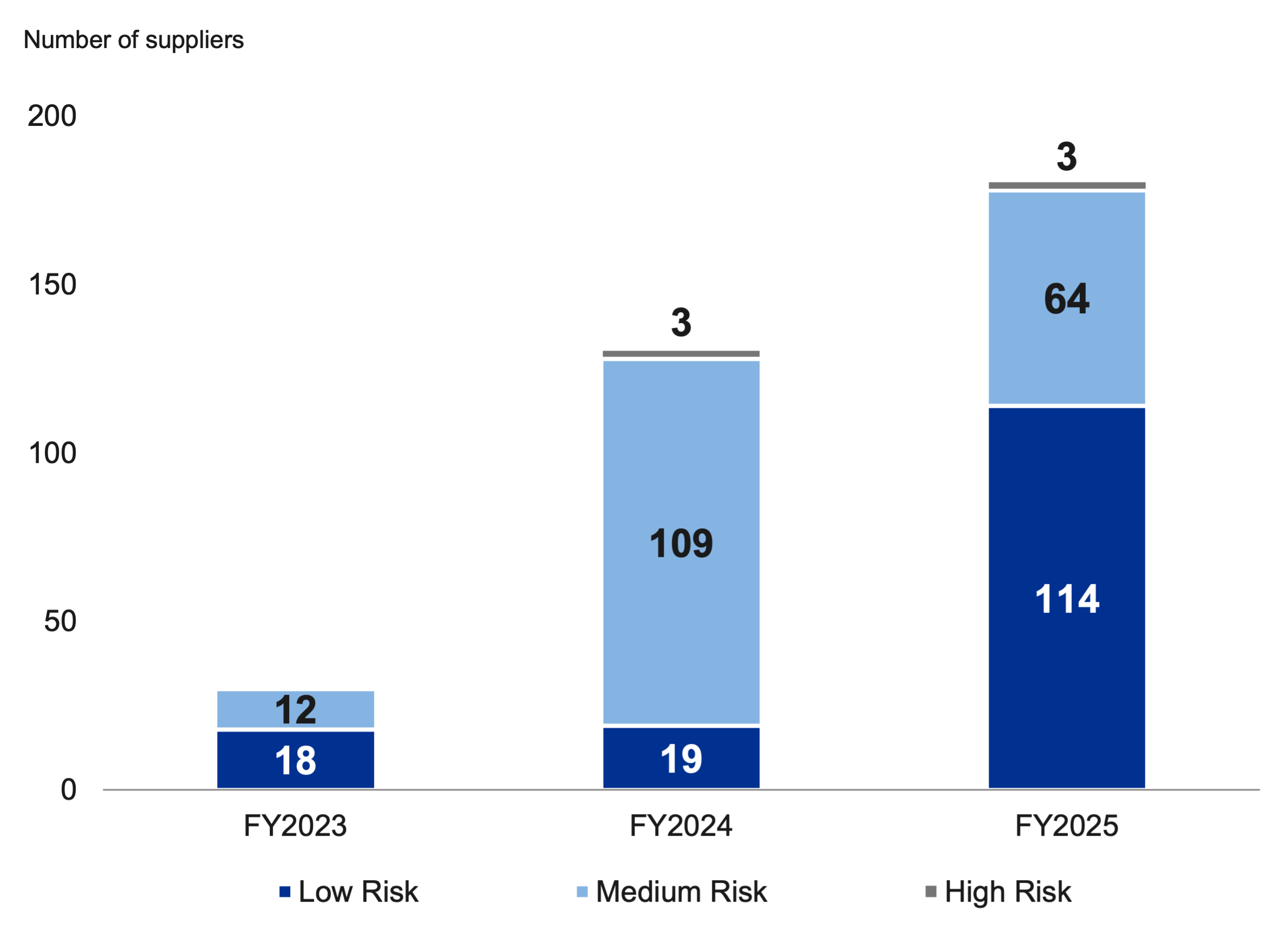
The SAQ quantitatively evaluates risks regarding management and initiative status in fields such as labor (human rights), health and safety, the environment, and ethics. The overall evaluation classifies suppliers into three categories: high risk, medium risk, and low risk. Based on these assessment results, Konica Minolta clarifies response directions and priorities according to the level of risk. For suppliers evaluated as high risk, the Company implements corrective actions by offering support for improvement and continuously monitoring progress, which leads to risk mitigation and continuous improvement in the supply chain.
| KPI | Results | Targets | |||
|---|---|---|---|---|---|
| FY2023 | FY2024 | FY2025 | FY2025 | FY2028 | |
| Number of critical suppliers |
103 | 143 | 183 | ― | ― |
| Number of assessments conducted | 30 | 131 | 181 | ― | ― |
| Assessment execution rate | 31% | 91.6% | 98.9% | 100% | 95% |
Risk Assessment Results for Critical Suppliers
for Indirect Materials Suppliers
| Type of Indirect Materials Supplier |
Number of Suppliers Assessed | ||
|---|---|---|---|
| FY2024 | FY2025 | ||
| On-site Contractors | Cafeteria | 4 | 3 |
| Security | 3 | 2 | |
| Maintenance | 3 | 2 | |
| Cleaning | 3 | 2 | |
| Others (medical, waste disposal, etc.) | 2 | 2 | |
| Temporary Staffing and Contracting | 11 | 1 | |
| Logistics / Warehousing Companies | 5 | 5 | |
| Other | - | 1 | |
| Total | 31 | 18 | |
Supplier Support
Konica Minolta carries out corrective actions and supports improvements for identified challenges based on risk assessment results.
By integrating these activities, Konica Minolta aims to mitigate risks and ensure sustainable improvement in the supply chain. If there is no prospect of improvement even after support is provided, termination of business transactions may be considered.
Konica Minolta implements phased corrective actions and improvement support for identified challenges based on supplier risk assessment results. The Company primarily focuses on voluntary improvement by suppliers, providing improvement proposals and supporting the formulation of corrective action plans. If voluntary improvement is deemed difficult, third-party audits are conducted as necessary to drive continuous improvement across the entire supply chain.
Voluntary improvement support for high-risk suppliers
For suppliers evaluated as high risk through SAQ assessments, Konica Minolta provides corrective support centered on voluntary improvement. Specifically, the Company proposes improvement measures for challenges identified from assessment results and collaborates with suppliers to formulate corrective action plans. Based on these plans, the Company encourages suppliers to execute improvements independently while continuously tracking progress.
For the three companies evaluated as high risk in fiscal 2025, challenges were identified such as the lack of policies prohibiting recruitment fees and defining working hours below 60 hours per week. To address these challenges, management regulations were established, explicitly documenting the prohibition of recruitment fees during hiring processes, and defining standards for working hours below 60 hours per week and average weekly overtime within 20 hours. The status of these improvements will be verified in the following fiscal year's SAQ, leading to continuous improvement.
Audits at priority suppliers
Conversely, if executing voluntary improvements is judged difficult, or if a severe risk of human rights violations is identified, the supplier is designated as a “priority supplier,” and more intensive responses are implemented. For priority suppliers, Konica Minolta conducts on-site audits such as the RBA VAP audit* as necessary, incorporating third-party perspectives to support improvements. For challenges identified through audits, the Company requests specific corrective actions and continuously monitors execution to ensure reliable improvements.
In fiscal 2025, no suppliers were designated as priority suppliers:
- Percentage of direct materials primary supplier facilities that underwent VAP or equivalent audits: 0.3%
- Percentage of priority supplier facilities that underwent VAP or equivalent audits: 0%
*RBA VAP (Validated Audit Program) audit: An audit where a third-party audit body verifies compliance status against the RBA Code of Conduct. Depending on the compliance level, Platinum, Gold, or Silver certification ranks are awarded. It is recognized globally as one of the most trusted third-party audits covering human rights/labor, health and safety, the environment, and ethics in the supply chain.
| KPI | Improvement Examples |
|---|---|
| FY2022 | Reviewing recruitment age conditions, abolishing wage deductions as disciplinary action, and enhancing considerations for pregnant/parturient employees at suppliers in China. |
| FY2023 | Refunding recruitment fees and improving labor and living environments at suppliers in Malaysia. |
| FY2024 | Formulating CSR policies and codes of conduct, returning official identification documents held by the company to employees, providing documents in native languages for foreign migrant workers, and conducting emergency preparedness training at suppliers in Malaysia. |
| FY2025 | Establishing regulations to prohibit recruitment fees and formalizing working hour standards. |
Education and Capacity Building
Procurement Collaboration
Based on the Konica Minolta Procurement Policy, the Digital Workplace and Professional Print businesses promote the procurement collaboration, through which Konica Minolta and its suppliers work together to drive continuous improvement. In this initiative, the Group shares challenges through dialogue with and visits to suppliers, makes proposals needed for their resolution, and provides concrete support aimed at comprehensive improvements in terms of quality, delivery, productivity, the environment, and business management. Suppliers also point out issues to Konica Minolta, which helps to improve issues with business transactions.
Environmental Collaboration
Konica Minolta has implemented environmental collaboration with suppliers to reduce environmental risk as a procurement collaboration in the area of the environment. This initiative creates solid partnerships through on-site assessments and educational support for suppliers in order to strengthen management of chemical substances included in the supply chain.
In fiscal 2025, Konica Minolta went directly to the manufacturing sites of 50 suppliers in and outside Japan to conduct on-site assessments, working with suppliers to strengthen the chemical substances management system. In addition, the Company confirms activities in areas such as labor, health and safety, the environment, and ethics at its suppliers’ manufacturing sites.
In addition, Konica Minolta has established an educational system focused on laws and regulations as well as on-site management that it uses to train suppliers’ internal assessors in an effort to support the independent management of chemical substances on the part of suppliers. Education on social trends and Konica Minolta’s initiatives was added to sustainable procurement initiatives starting in fiscal 2018. In fiscal 2025, Konica Minolta conducted 106 internal assessments.
Business Partners Conference
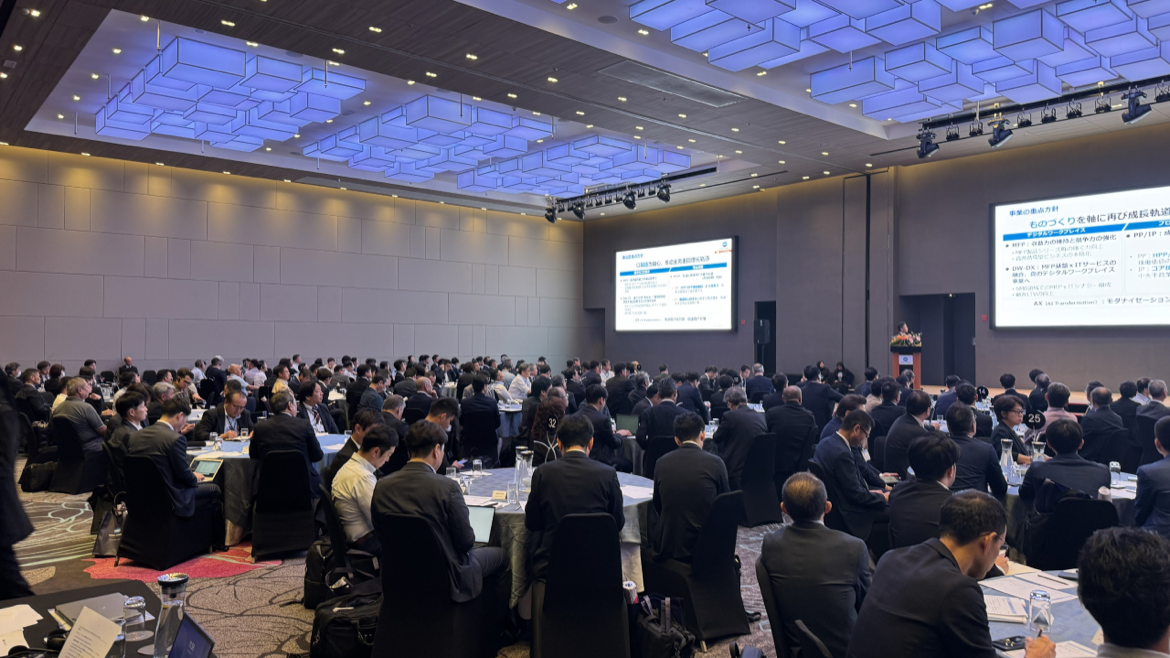
In April 2026, Konica Minolta held a Business Partners Conference in Malaysia, attended by approximately 240 participants representing 118 suppliers from 7 countries worldwide. This conference is positioned as an important venue to share the direction of production and procurement activities and the approach to future value creation under long-term partnerships with suppliers. While it had been conducted remotely since 2020, this session marked the return to an in-person format for the first time in approximately seven years. On the day, the Company shared its business policies, medium- to long-term strategies, production/procurement strategies, and supply chain common challenges such as security and ESG. Through this process, Konica Minolta articulated its policy of working alongside suppliers on risk mitigation, transparency improvement, and resilience enhancement across the entire supply chain. Additionally, the Company honored 14 suppliers that achieved excellent results from the perspectives of safety, quality, cost, delivery, compliance, environment, and financial sustainability (SQCDCEF), sharing best practices and further strengthening partnerships.
Konica Minolta will continue to drive sustainable procurement and value creation across the entire supply chain through dialogue and collaboration with suppliers.
Audit Support
Regardless of the results of the Sustainable Procurement Promotion Program, Konica Minolta promotes the execution of RBA VAP audits and the acquisition of certification for certain suppliers involved in the Digital Workplace and Professional Print businesses, based on social expectations, customer requests, and bidding requirements. When suppliers undergo audits, Konica Minolta leverages its own auditing experience to support improvements.
As an example of implementation, the Company provided education for internal auditors at Dongguan Konka Mould Plastic Co., Ltd. in China, supporting the creation of a system to independently conduct internal audits and drive continuous improvement. Furthermore, for contract manufacturing facilities producing multi-functional peripheral (MFP) main bodies that underwent VAP audits, Konica Minolta shared its own improvement examples to support corrective actions.
In fiscal 2025, three suppliers underwent RBA VAP audits, and two successfully obtained certification.
| KPI | Results | Targets | |||
|---|---|---|---|---|---|
| FY 2023 |
FY 2024 |
FY 2025 |
FY 2025 |
FY 2028 |
|
| Certification acquisition rate | 100% | 100% | 67%* | 100% | 100% |
*One of the three companies was audited at the end of FY2025. Following the completion of corrective actions, certification is expected to be obtained during FY2026.
Responsible Minerals Procurement Initiatives
As part of its initiatives for supply chain sustainability, Konica Minolta promotes responsible minerals procurement to address challenges in the sourcing of mineral resources.
It has been pointed out that the mining of mineral resources used in the manufacture of electronic equipment — such as tungsten, tantalum, gold, and tin — can serve as a source of funding for armed groups in conflict-affected and high-risk areas, including the Democratic Republic of the Congo and its surrounding regions, leading to severe human rights violations such as child labor and forced labor. To address these international challenges, the Organisation for Economic Co-operation and Development (OECD) established the Due Diligence Guidance for Responsible Supply Chains of Minerals from Conflict-Affected and High-Risk Areas (hereafter "OECD Guidance"), requiring companies to take appropriate measures throughout their supply chains.
Additionally, regulations in various countries and regions are tightening, such as the information disclosure requirements for conflict minerals (3TG)*1 under Section 1502 of the U.S. Dodd-Frank Wall Street Reform and Consumer Protection Act and the implementation of the EU Conflict Minerals Regulation, and these moves demand a higher standard of compliance from companies. Furthermore, industry organizations such as the Responsible Minerals Initiative (RMI)*2 and the Japan Electronics and Information Technology Industries Association (JEITA)*3 are also driving initiatives related to responsible minerals procurement.
In light of these international trends, Konica Minolta works to understand and mitigate risks in mineral procurement while striving to ensure sustainable procurement across the entire supply chain.
- *1Conflict minerals: tin, tantalum, tungsten and gold, derived from cassiterite, columbitetantalite (coltan), wolframite and gold ores, respectively.
- *2Responsible Minerals Initiative (RMI): An international organization that supports responsible corporate practices in minerals procurement from conflict-affected and high-risk areas.
- *3Japan Electronics and Information Technology Industries Association (JEITA): An industry association in Japan’s IT and electronics sector with about 400 companies and organizations.
Framework for Initiatives
Konica Minolta carries out initiatives for responsible minerals procurement in line with the Five-Step Framework for Risk-Based Due Diligence in the Mineral Supply Chain in the OECD Guidance.
Step 1: Establish Strong Company Management Systems
Konica Minolta has established the Konica Minolta Responsible Minerals Procurement Policy, which addresses the prevention of human rights violations caused by conflicts. The Company works to ensure that all suppliers of direct materials are made aware of this policy and requires, in its basic transaction contracts, that business partners engage in responsible minerals initiatives. In addition, a mechanism for implementing Responsible Minerals surveys, including production sites in Japan and overseas, has been prepared to identify the smelters or refiners in the supply chain. The management and staff in the procurement divisions in charge of procurement are given training to enhance their understanding of Responsible Minerals initiatives and motivate them. In addition, the grievance platform developed by RMI is used.
Step 2: Identify and Assess Risk in the Supply Chain
Using the Conflict Minerals Reporting Template (CMRT) and Extended Minerals Reporting Template (EMRT) issued by RMI, Konica Minolta implements surveys on minerals of necessity for the high functionality of Konica Minolta products (3TG, cobalt and mica). The survey confirms the presence of 3TG, cobalt and mica, identifies their countries of origin, identifies the smelters or refiners in the Company’s supply chain, and confirms their due diligence. For risk assessment, Konica Minolta utilizes the Responsible Minerals Assurance Process (RMAP), RMI’s conflict-free audit program. Based on the results of the survey and information about the identified smelters or refiners in the supply chain, Konica Minolta assesses the risk to the supply chain overall, by each supplier, and by each product. These results are reported to the Group Human Rights Officer.
Step 3: Design and Implement a Strategy to Respond to Identified Risks
Based on the results of the risk assessment, Konica Minolta provides information on the RMAP status of the smelters or refiners used by all suppliers of direct materials and requests that they switch to smelters or refiners certified under RMAP. Konica Minolta conveys any customer concerns to suppliers using smelters or refiners when customers have raised concerns about them, and asks that they respond appropriately, such as reassessing the smelters or refiners in question. Indirect efforts are also made to eliminate the risk of conflict complicity, such as activities building awareness about the issue of responsible minerals.
Step 4: Carry Out Independent Third-Party Due Diligence Audits for Smelters or Refiners
Konica Minolta is active as a member of RMI. In addition, through JEITA activities, smelters or refiners are encouraged to participate in RMAP.
Step 5: Report Annually on Supply Chain Due Diligence
Konica Minolta’s Responsible Minerals initiatives are disclosed every year on this website.
Targets, Results, and Initiatives of the Minerals Procurement Survey
Survey Results
All Businesses
Konica Minolta collected responses to the Minerals Procurement Survey using CMRT from approximately 70% of the highest-priority suppliers of direct materials across all businesses. Based on an evaluation using RMAP, Konica Minolta confirmed that approximately 89% of these suppliers are conflict-free.
Digital Workplace and Professional Print Businesses
Surveys were conducted with all suppliers of direct materials, and the response rates to the Minerals Procurement Survey using CMRT and the Cobalt and Mica Survey using EMRT conducted in fiscal 2025 were 97% and 95%, respectively.
When conducting these surveys, Konica Minolta asked suppliers to help improve supply chain transparency by reducing the number of unknown responses about smelters or refiners information and to implement due diligence aimed at ensuring non-involvement in conflicts.
Due diligence conducted on responses to the 3TG, cobalt, and mica surveys identified 329 3TG smelters or refiners, of which 214 were RMAP Conformant or Active,* as well as 126 cobalt and mica smelters or refiners, of which 67 were RMAP Conformant or Active.
In addition, 123 countries or territories were identified as the countries or territories of origin of 3TG in the supply chain (as of April 16, 2026).
No evidence of conflict involvement was found in any of the supply chains surveyed.
*Active smelters or refiners: Smelters or refiners that are under RMAP audit or have committed to undergo an audit.
| KPI | Results | Targets | |||
|---|---|---|---|---|---|
| FY 2023 |
FY 2024 |
FY 2025 |
FY 2025 |
FY 2028 |
|
| Percentage of suppliers returning conflict mineral surveys |
95% | 95% | 97% | 95% or more |
95% or more |
Smelter Due Diligence Results by Metal
| Identified Smelters or refiners | Smelters or refiners verified as conflict-free or in the audit process | Percentage | |
|---|---|---|---|
| Gold | 174 | 96 | 55% |
| Tantalum | 35 | 33 | 94% |
| Tin | 72 | 53 | 73% |
| Tungsten | 48 | 32 | 68% |
| Total 3TG | 329 | 214 | 65% |
| Identified smelters or refiners | Smelters or refiners verified as conflict-free or in the audit process | Percentage | |
|---|---|---|---|
| Cobalt | 96 | 61 | 63% |
| Mica | 30 | 6 | 20% |
| Total for cobalt and mica | 126 | 67 | 53% |
Response to Customer Requests for Responsible Minerals Surveys
In fiscal 2025, many customers in the Digital Workplace Business, Professional Print Business, Industry Business, and Imaging Solutions Business requested Responsible Minerals surveys. Konica Minolta appropriately responded to all such customers by submitting responsible minerals survey forms and taking other necessary actions. Inquiries about responsible minerals other than surveys were also responded to appropriately, based on survey results and the Company’s own initiatives. In addition, Konica Minolta has been conducting surveys on cobalt since fiscal 2018, and on mica since fiscal 2021, and has appropriately responded to customers’ requests for these surveys as well.
| KPI | Results | Targets | |||
|---|---|---|---|---|---|
| FY2023 | FY2024 | FY2025 | FY2025 | FY2028 | |
| Response Rate to Customer Requests for Responsible Minerals Surveys |
100% response | 100% response | 100% response | 100% response | 100% response |